
World
Europe Responds Firmly to Trump’s Tariff Threats Over Greenland

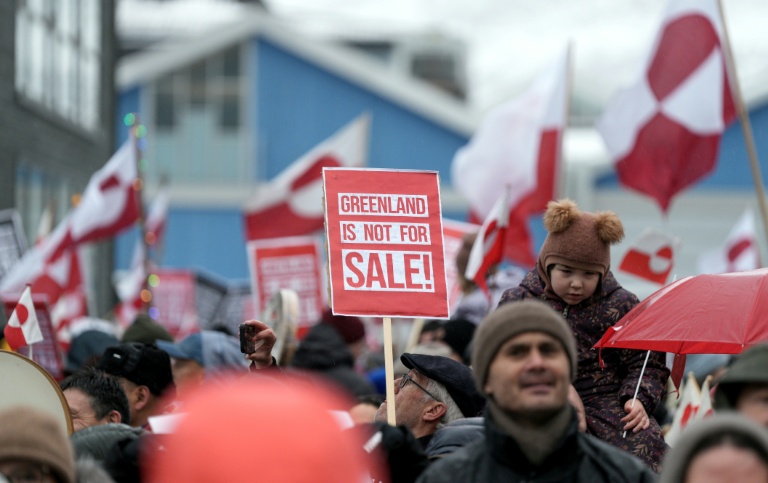
European leaders are mobilizing in response to US President Donald Trump‘s recent threats to impose tariffs on several European nations over their military activities in Greenland. This development marks a significant escalation in tensions, particularly regarding Trump’s ongoing interest in acquiring the Arctic island, which is an autonomous territory of Denmark.
On January 28, 2024, Trump threatened to impose a 10 percent tariff on all goods imported from Denmark, Norway, Sweden, France, Germany, the United Kingdom, the Netherlands, and Finland. This tariff would increase to 25 percent on June 1, 2024, unless a deal is reached for the “complete and total purchase of Greenland.” This ultimatum has raised alarms among European leaders, who view it as an unwarranted economic threat.
Italian Prime Minister Giorgia Meloni, who has maintained a good rapport with Trump, expressed her concerns during a press conference in Seoul, stating, “I believe that imposing new sanctions today would be a mistake.” Meloni emphasized the need for improved communication between Europe and the United States regarding Greenland, suggesting that NATO should take an active role in addressing the situation.
British Prime Minister Keir Starmer is also preparing to discuss the matter with Trump as soon as possible. UK Culture Minister Lisa Nandy labeled the tariff threats as “deeply unhelpful” and “counterproductive,” underscoring the need for diplomatic engagement rather than economic penalties.
European Union’s Response and Proposed Measures
In response to the looming tariff threats, French President Emmanuel Macron has urged the European Union to activate its “anti-coercion instrument,” a significant trade measure that has yet to be utilized. This instrument allows the EU to restrict imports of goods and services as a countermeasure against economic pressure.
The European Commission President Ursula von der Leyen and Antonio Costa, President of the European Council, warned that these tariffs could severely harm transatlantic relations, potentially leading to a “dangerous downward spiral.” An extraordinary meeting of EU ambassadors was called in Brussels to assess the situation and strategize a unified response.
Meanwhile, protests erupted in Greenland’s capital Nuuk and other Danish cities against the potential US annexation, as thousands voiced their opposition to Trump’s intentions. Denmark’s Foreign Minister Lars Lokke Rasmussen announced plans to visit NATO allies, including Norway, the UK, and Sweden, to discuss the alliance’s Arctic security policy.
Potential Impact on Transatlantic Relations
The escalating situation has prompted various European officials to highlight the broader implications of Trump’s tariff threats. French Agricultural Minister Annie Genevard warned that the tariffs would not only harm Europe but also have detrimental effects on American farmers and industries.
Dutch Foreign Minister David van Weel characterized Trump’s threats as an “inexplicable” form of “blackmail,” further illustrating the severity of the tensions arising from this diplomatic clash. The potential for economic retaliation has created an atmosphere of uncertainty that could disrupt trade between the US and several key European nations.
As diplomatic discussions unfold, the future of transatlantic relations hangs in the balance, with leaders on both sides working to navigate this increasingly complex geopolitical landscape. The unfolding situation underscores the delicate nature of international diplomacy, particularly concerning matters as contentious as territorial claims and economic sanctions.





American Airlines Pilots Challenge Management After Poor Results

Kirsten Hillman Concludes Historic Ambassadorial Tenure in Washington

Centenarian Mildred “Blondie” Siegel Celebrates 100 Years of Life

Experts Warn of Rapid Rise in AI-Generated Threats to Canada

Trump Faces Criticism as Super Bowl Approaches Without His Presence

Researchers Test Birth Control to Tame Chicago’s Rat Population

Trump Skips Super Bowl Amid Rising Tensions and Backlash

European Central Bank Maintains Steady Rates Amid Resilient Economy

Canada Invests $570 Million to Reskill Auto Workers for Future

Secwepemc First Nation Seeks Aboriginal Title Over Kamloops Area

Scientists Unearth Ancient Antarctic Ice to Unlock Climate Secrets

Urgent Fire Erupts at Salvation Army on Christmas Evening

Canadian Curler E.J. Harnden Announces Retirement from Competition

Manitoba’s Burger Champion Shines Again Amid Dining Innovations

Fatal Crash on Highway 11 Claims Three Lives, Major Closure Ongoing

Trump and McCormick to Announce $70 Billion Energy Investments

Four Astronauts Return to Earth After International Space Station Mission

TransLink Launches Food Truck Program to Boost Revenue in Vancouver
-
 Politics3 months ago
Secwepemc First Nation Seeks Aboriginal Title Over Kamloops Area
-
 World7 months ago
Scientists Unearth Ancient Antarctic Ice to Unlock Climate Secrets
-
 Top Stories1 month ago
Urgent Fire Erupts at Salvation Army on Christmas Evening
-
 Sports1 month ago
Canadian Curler E.J. Harnden Announces Retirement from Competition
-
 Lifestyle5 months ago
Manitoba’s Burger Champion Shines Again Amid Dining Innovations
-
 Top Stories2 months ago
Fatal Crash on Highway 11 Claims Three Lives, Major Closure Ongoing
-
 Entertainment7 months ago
Trump and McCormick to Announce $70 Billion Energy Investments
-
 Science7 months ago
Four Astronauts Return to Earth After International Space Station Mission
-
 Lifestyle7 months ago
TransLink Launches Food Truck Program to Boost Revenue in Vancouver
-

 Technology5 months ago
Apple Notes Enhances Functionality with Markdown Support in macOS 26
-

 Top Stories1 month ago
Blue Jays Sign Kazuma Okamoto: Impact on Bo Bichette’s Future
-

 Top Stories2 months ago
NHL Teams Inquire About Marc-André Fleury’s Potential Return