
World
F-35 Production Costs Soar by Nearly 50% in Three Years

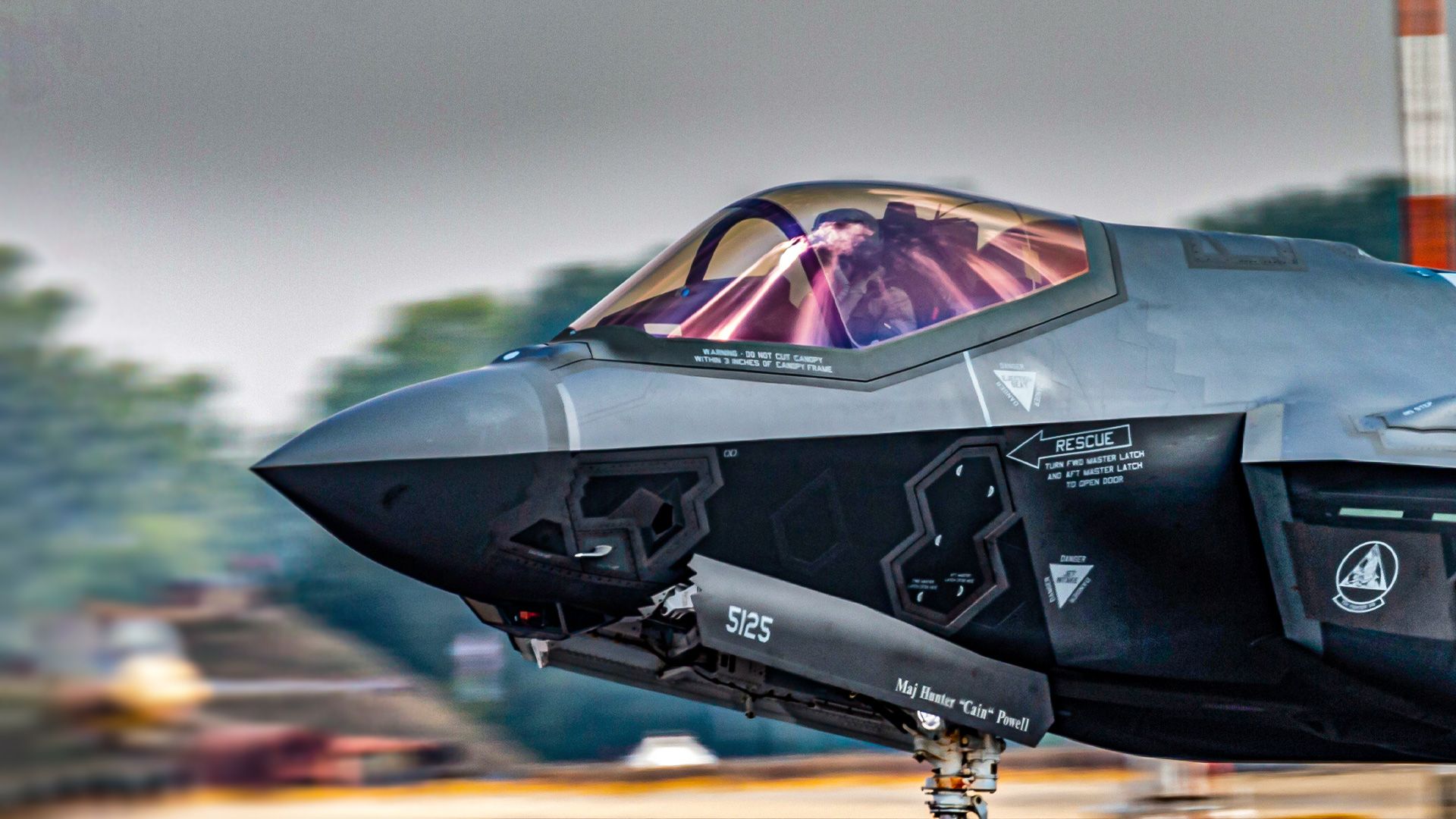
The cost of producing the Lockheed Martin F-35 Lightning II fighter jets has surged significantly over the past three years, with estimates reflecting an increase of nearly 50%. Originally projected at around $19 billion (€16 billion) for Canada’s purchase of 88 jets, the latest figures indicate a revised cost of approximately $27.7 billion (€23.3 billion) by January 2026. This escalation is prompting Canadian officials to reassess their defense spending priorities and overall military strategy.
The F-35 Lightning II Program Overview
The F-35 Lightning II is a fifth-generation, multirole stealth fighter jet developed through an international collaboration led by the United States. Designed to replace an array of older aircraft, including the F-16 and F/A-18, the jet integrates advanced stealth, sensor technology, and networked combat capabilities.
There are three principal variants of the F-35. The F-35A, utilized mainly by the US Air Force, is a conventional takeoff and landing version. The F-35B, which features short takeoff and vertical landing capabilities, is primarily operated by the US Marine Corps. Lastly, the F-35C is optimized for aircraft carrier operations and is used by the US Navy. Despite their differences, all variants share a unified design and avionics system, emphasizing sensor fusion and data-sharing to enhance operational effectiveness.
Reasons Behind Rising Costs
Several factors contribute to the escalating costs associated with the F-35 program. Inflation and global supply chain disruptions have critically impacted production. Increased labor costs, alongside higher prices for raw materials, have inflated the price of aircraft components and maintenance services.
Moreover, initial budget estimates did not fully account for the extensive infrastructure and support systems required for the F-35’s operation. Upgrades to hangars, runways, and digital networks have become essential as program planning progressed. These factors, combined with the establishment of larger contingency funds for potential risks, have significantly raised the overall projected costs.
As noted in a report by Canada’s Auditor General, this revised figure does not include several major costs, such as weapons procurement and infrastructure improvements, which could add billions more to the total. The potential impact of these rising expenses has sparked debates over the sustainability of Canada’s defense budget and military commitments.
The situation has further intensified following statements from US officials suggesting that any reductions or cancellations of the F-35 purchase could affect cooperative defense arrangements. This may require the United States to increase its own military presence in Canadian airspace, adding strategic implications to the rising costs.
Delivery delays also play a critical role in the F-35 program’s complexities. Manufacturing challenges and supply chain issues have led to postponed timelines for aircraft acceptance, causing partner nations to extend the operational life of older fleets. This situation not only increases maintenance costs but also complicates long-term budgeting and operational planning.
The ongoing changes within the F-35 program are leading to a broader reassessment of risk and financial strategies among partner nations. The need for resilient contingency measures has become essential to address uncertainties in delivery schedules and potential upgrades.
In summary, the F-35 program exemplifies the intricate balance between advanced military technology and fiscal responsibility. As nations grapple with the rising costs and operational implications, the future of the F-35 will likely continue to shape defense planning and international military collaboration.












Morris Churches Unite for Annual Good Friday Walk With the Cross

Chloe Zhao’s ‘Buffy’ Reboot Cancelled: Sarah Michelle Gellar Speaks Out

Essential Ingredients for Life Found in Ryugu Asteroid Samples

Urgent Rescue: NSR Airlifts Injured Climber from Nanaimo

Riverside Heart Ball Achieves Record $815,000 for Mental Health

Cognizant Launches AI Factory to Enhance Enterprise AI Scalability

Samsung’s Galaxy Watch 9 to Feature Larger Battery Than Before

Toronto’s AIDS Memorial Faces Potential Redesign Amid Community Concerns

Bayern Munich Loses Luis Díaz Red Card Appeal Despite Referee’s Admission

Secwepemc First Nation Seeks Aboriginal Title Over Kamloops Area

Fatal Crash on Highway 11 Claims Three Lives, Major Closure Ongoing

Manitoba’s Burger Champion Shines Again Amid Dining Innovations

Canadian Curler E.J. Harnden Announces Retirement from Competition

Urgent Fire Erupts at Salvation Army on Christmas Evening

Scientists Unearth Ancient Antarctic Ice to Unlock Climate Secrets

Trump and McCormick to Announce $70 Billion Energy Investments

Minister Faces Scrutiny Over Delayed Foreign Interference Watchdog Appointment

Four Astronauts Return to Earth After International Space Station Mission
-
 Politics5 months ago
Secwepemc First Nation Seeks Aboriginal Title Over Kamloops Area
-
 Top Stories4 months ago
Fatal Crash on Highway 11 Claims Three Lives, Major Closure Ongoing
-
 Lifestyle7 months ago
Manitoba’s Burger Champion Shines Again Amid Dining Innovations
-
 Sports3 months ago
Canadian Curler E.J. Harnden Announces Retirement from Competition
-
 Top Stories3 months ago
Urgent Fire Erupts at Salvation Army on Christmas Evening
-
 World9 months ago
Scientists Unearth Ancient Antarctic Ice to Unlock Climate Secrets
-
 Entertainment9 months ago
Trump and McCormick to Announce $70 Billion Energy Investments
-
 World5 months ago
Minister Faces Scrutiny Over Delayed Foreign Interference Watchdog Appointment
-
 Science9 months ago
Four Astronauts Return to Earth After International Space Station Mission
-

 Lifestyle9 months ago
Monika Hibbs Unveils Acres Market & Interiors in Major Rebrand
-

 Lifestyle9 months ago
TransLink Launches Food Truck Program to Boost Revenue in Vancouver
-

 World1 month ago
Ranchman’s Cookhouse & Dancehall to Relocate by Early 2027