
World
F-4 Phantom II: A Deep Dive into Its Range and Fuel Efficiency

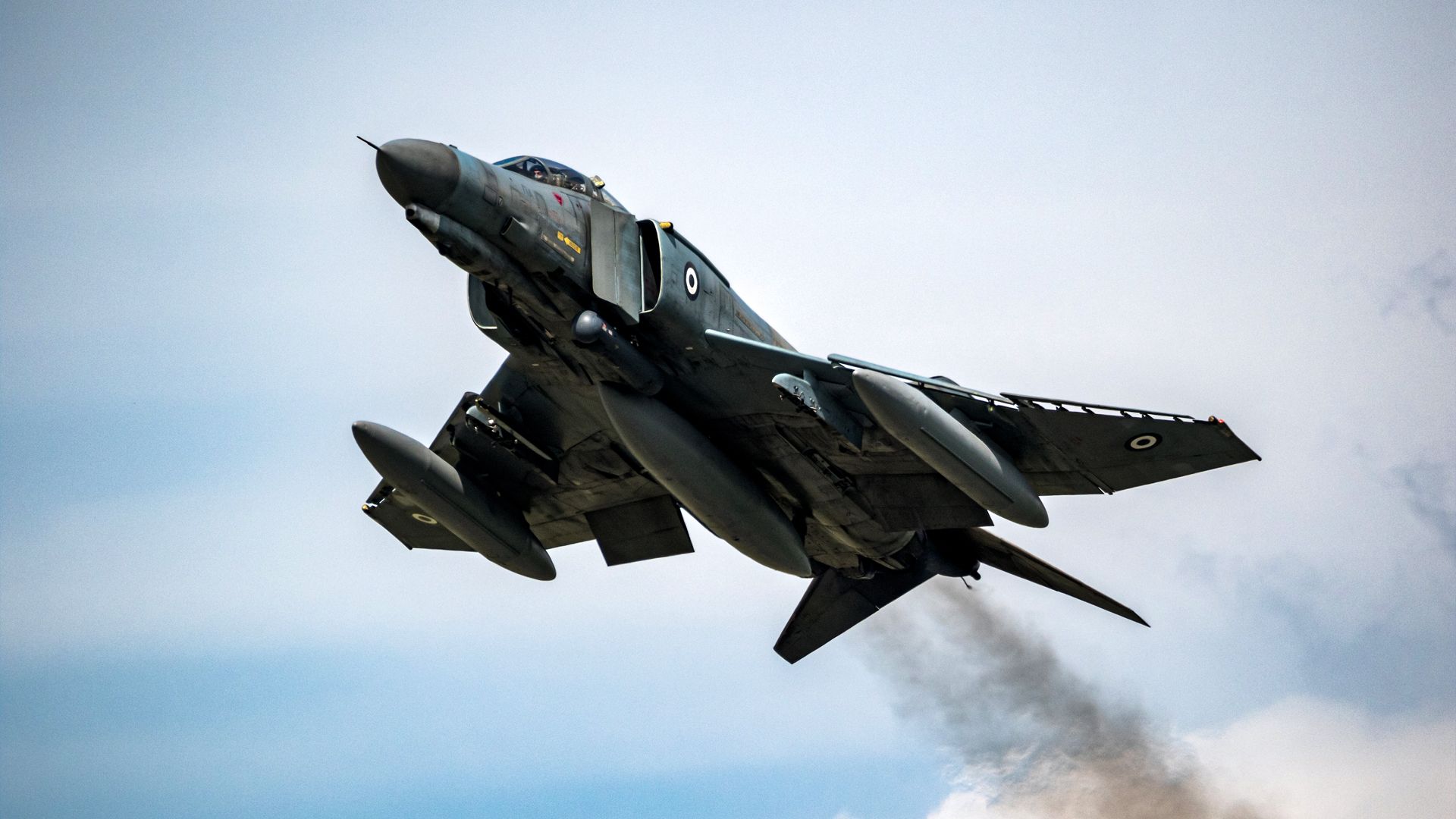
The McDonnell Douglas F-4 Phantom II, a cornerstone of American air power, has a storied history marked by impressive performance and unique fuel efficiency challenges. Known for its remarkable speed and versatility, this fighter jet has served not only in the United States Armed Forces but has also been a key asset for numerous allied air forces globally. The F-4 Phantom II is often remembered for its groundbreaking design, which led to a significant evolution in multirole fighter capabilities that influenced modern aircraft like the General Dynamics F-16 and Lockheed Martin F-35.
The F-4 Phantom II can operate under various conditions, but its fuel consumption remains a critical factor in its range and effectiveness. In optimal conditions, the aircraft can sustain flight for approximately three hours without refueling. However, in combat scenarios, particularly when executing high-energy maneuvers, the Phantom may deplete its fuel reserves in as little as 15 to 30 minutes. The aircraft’s performance is powered by two robust General Electric J79 turbojet engines, which were revolutionary at the time of their introduction.
Performance and Fuel Dynamics
Throughout its production, which totaled 5,195 units, the F-4 Phantom II underwent various enhancements. The J79 engines initially provided a thrust of 10,300 pounds for early models like the F-4A and F-4B. In contrast, the more advanced F-4E achieved about 11,870 pounds. With afterburners activated, these figures increased significantly, with the F-4E producing 17,900 pounds, a testament to the advancements made over its production run.
Notably, the F-4 Phantom II was also adapted for naval operations, particularly with variants like the F-4K, which was exclusively used by the Royal Navy. This variant featured Rolls-Royce Spey turbofans, which, while offering higher thrust, resulted in lower top speeds due to increased drag. The F-4K’s design allowed for better fuel efficiency during subsonic cruise, enhancing its loiter time during carrier patrols, which was essential for operations from vessels like the HMS Ark Royal.
The combat radius of the F-4 varies among its models, with the F-4B achieving approximately 400 miles, while the F-4E extends this reach to 422 miles, and the F-4K boasts an impressive 550-mile radius. The aircraft’s internal fuel capacity is consistent among these variants, with each able to carry 1,994 gallons.
Fuel Strategies and Aerial Refueling
A key feature of the F-4 Phantom II’s design is its capacity for aerial refueling, which has significantly enhanced its operational range. This capability transformed the Phantom from a short-range interceptor into a versatile long-range strike platform, allowing for missions that extended up to eight hours.
The U.S. Navy and Marine Corps utilized a retractable probe system for refueling, which connects to a drogue basket deployed by tankers such as the KC-130. Meanwhile, the U.S. Air Force employed a boom system with its KC-135 Stratotankers, allowing for faster and more efficient fuel transfers, exceeding 1,000 gallons per minute.
While the F-4 Phantom II was initially designed for shorter missions, the integration of external fuel tanks significantly increased its operational flexibility. Typically equipped with one large centerline tank and two smaller wing tanks, this configuration expanded the F-4’s fuel capacity by about 65%. However, this added weight and drag limited its speed and maneuverability, particularly in combat situations.
The F-4 Phantom II, with its rich legacy, continues to be a powerful symbol of military aviation. Even decades after its initial introduction, approximately 100 units remain in service worldwide, showcasing its enduring relevance and adaptability in modern military operations. The combination of its formidable performance and strategic fuel management exemplifies why the F-4 Phantom II remains an iconic aircraft in the realm of aerial combat.








Morris Churches Unite for Annual Good Friday Walk With the Cross

Chloe Zhao’s ‘Buffy’ Reboot Cancelled: Sarah Michelle Gellar Speaks Out

Essential Ingredients for Life Found in Ryugu Asteroid Samples

Urgent Rescue: NSR Airlifts Injured Climber from Nanaimo

Riverside Heart Ball Achieves Record $815,000 for Mental Health

Cognizant Launches AI Factory to Enhance Enterprise AI Scalability

Samsung’s Galaxy Watch 9 to Feature Larger Battery Than Before

Toronto’s AIDS Memorial Faces Potential Redesign Amid Community Concerns

Bayern Munich Loses Luis Díaz Red Card Appeal Despite Referee’s Admission

Secwepemc First Nation Seeks Aboriginal Title Over Kamloops Area

Fatal Crash on Highway 11 Claims Three Lives, Major Closure Ongoing

Manitoba’s Burger Champion Shines Again Amid Dining Innovations

Canadian Curler E.J. Harnden Announces Retirement from Competition

Urgent Fire Erupts at Salvation Army on Christmas Evening

Scientists Unearth Ancient Antarctic Ice to Unlock Climate Secrets

Minister Faces Scrutiny Over Delayed Foreign Interference Watchdog Appointment

Trump and McCormick to Announce $70 Billion Energy Investments

Monika Hibbs Unveils Acres Market & Interiors in Major Rebrand
-
 Politics5 months ago
Secwepemc First Nation Seeks Aboriginal Title Over Kamloops Area
-
 Top Stories4 months ago
Fatal Crash on Highway 11 Claims Three Lives, Major Closure Ongoing
-
 Lifestyle7 months ago
Manitoba’s Burger Champion Shines Again Amid Dining Innovations
-
 Sports3 months ago
Canadian Curler E.J. Harnden Announces Retirement from Competition
-
 Top Stories4 months ago
Urgent Fire Erupts at Salvation Army on Christmas Evening
-
 World9 months ago
Scientists Unearth Ancient Antarctic Ice to Unlock Climate Secrets
-
 World5 months ago
Minister Faces Scrutiny Over Delayed Foreign Interference Watchdog Appointment
-
 Entertainment9 months ago
Trump and McCormick to Announce $70 Billion Energy Investments
-
 Lifestyle9 months ago
Monika Hibbs Unveils Acres Market & Interiors in Major Rebrand
-

 Science9 months ago
Four Astronauts Return to Earth After International Space Station Mission
-

 Lifestyle9 months ago
TransLink Launches Food Truck Program to Boost Revenue in Vancouver
-

 World1 month ago
Ranchman’s Cookhouse & Dancehall to Relocate by Early 2027