
World
Greenland’s Youngest Parliamentarian Calls for Stronger Ties with Canada

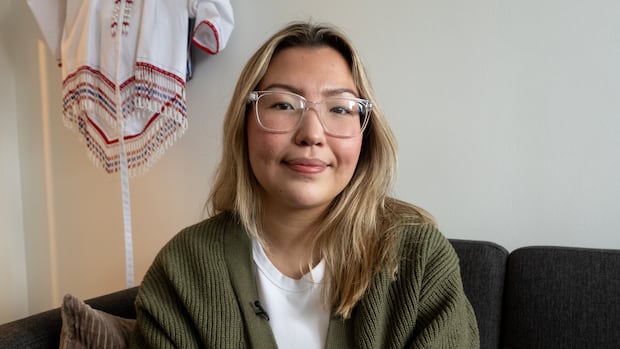
The political landscape in Greenland is shifting as Nivi Rosing, the youngest member of Parliament at just 22 years old, emphasizes the importance of strengthening ties with Canada in light of ongoing geopolitical tensions. Following the cessation of Donald Trump‘s aggressive posturing towards Greenland, the island’s residents remain deeply affected by the intimidation they experienced during his presidency. Rosing has articulated the pervasive sense of anxiety among her constituents, stating, “People are very scared. It’s consuming our everyday life,” during a recent interview in her office in Nuuk, the capital of Greenland.
Trump’s interest in Greenland began in earnest in 2019, but recent months have seen a dramatic escalation in rhetoric surrounding the territory. Although he has since allowed NATO to play an active role in military planning regarding Greenland, Rosing notes that this has offered little reassurance to the island’s population. The unpredictability of the former president’s actions has left many feeling vulnerable. “Dog owners are vaccinating their dogs so they can leave the country if there’s any sign of an invasion,” she explained, highlighting the extreme measures residents are contemplating.
In a recent parliamentary session, Jens-Frederik Nielsen, the Prime Minister of Greenland, reminded the assembly that Trump still harbors ambitions for control over the island. He urged citizens not to become complacent, as the specter of potential U.S. intervention looms large in public consciousness.
Rosing’s Political Journey
Rosing’s ascent to political prominence has been swift, beginning just a year ago while she was a student in Canada. Enrolled in the Inuit Studies program at Nunavut Sivuniksavut, she focused on history, culture, and human rights. The program empowered her to envision a future where she could influence Greenland’s political landscape. “It was through Inuit eyes and how our ancestors used to govern these lands and our culture and healing — and how to use our culture as a tool for political decisions,” she reflected.
Elected to the Inuit Ataqatigiit party in March 2025, Rosing quickly became part of a governing coalition. Her responsibilities include serving on the Foreign and Security Policy Committee, where she engages in critical discussions about Greenland’s international relations and sovereignty.
Rosing participated in recent diplomatic efforts, meeting with a bipartisan delegation of U.S. lawmakers in Copenhagen. “We didn’t come with hate; we always come with respect and diplomacy,” she stated. The Greenlandic parliament’s joint message to the U.S. emphasized the desire to be recognized as Greenlanders rather than as Danes or Americans.
Strengthening Canada-Greenland Relations
Amid the geopolitical uncertainties, Rosing is optimistic about the opening of a new Canadian consulate in Nuuk, a move aimed at enhancing diplomatic and cultural ties. The consulate will be inaugurated by Canada’s Minister of Foreign Affairs, Anita Anand, and Mary Simon, the country’s first Indigenous Governor General and an Inuk herself. Rosing views this development as a significant step toward fostering closer relationships between Canada and Greenland, which could provide a buffer against U.S. pressures.
“I want closer ties with Canada. If it’s cultural, if it’s business, if it’s education, I think we want to work with Canada,” Rosing said, underscoring the importance of building resilience through personal connections. The consulate is expected to prioritize cooperation on Arctic governance and security, an area of increasing significance given the region’s strategic importance.
Recent history illustrates the complexities of international relations in the Arctic. In 2022, Canada and Denmark resolved a longstanding dispute over territorial boundaries related to Hans Island, allowing for greater freedom of movement for Inuit communities across the two regions. This agreement highlights the potential for collaboration between Canada and Greenland, particularly in light of shared cultural heritage and interests.
Despite her newfound political responsibilities, Rosing has aspirations to return to her studies in Ottawa. Yet, she acknowledges the challenges posed by external political pressures, particularly from the U.S. “I think there is still an agenda, and [Trump] wants to own and control Greenland — even though maybe it’s not through an invasion,” she remarked, reflecting on the uncertainty that defines her role.
As Greenland navigates its future amid global power dynamics, Rosing’s voice represents a new generation of leaders focused on self-determination and resilience. Her commitment to fostering international relationships, particularly with Canada, signals a proactive approach to securing Greenland’s sovereignty and cultural identity in an increasingly complex world.










Morris Churches Unite for Annual Good Friday Walk With the Cross

Chloe Zhao’s ‘Buffy’ Reboot Cancelled: Sarah Michelle Gellar Speaks Out

Essential Ingredients for Life Found in Ryugu Asteroid Samples

Urgent Rescue: NSR Airlifts Injured Climber from Nanaimo

Riverside Heart Ball Achieves Record $815,000 for Mental Health

Cognizant Launches AI Factory to Enhance Enterprise AI Scalability

Samsung’s Galaxy Watch 9 to Feature Larger Battery Than Before

Toronto’s AIDS Memorial Faces Potential Redesign Amid Community Concerns

Bayern Munich Loses Luis Díaz Red Card Appeal Despite Referee’s Admission

Secwepemc First Nation Seeks Aboriginal Title Over Kamloops Area

Fatal Crash on Highway 11 Claims Three Lives, Major Closure Ongoing

Manitoba’s Burger Champion Shines Again Amid Dining Innovations

Canadian Curler E.J. Harnden Announces Retirement from Competition

Urgent Fire Erupts at Salvation Army on Christmas Evening

Scientists Unearth Ancient Antarctic Ice to Unlock Climate Secrets

Trump and McCormick to Announce $70 Billion Energy Investments

Minister Faces Scrutiny Over Delayed Foreign Interference Watchdog Appointment

Four Astronauts Return to Earth After International Space Station Mission
-
 Politics5 months ago
Secwepemc First Nation Seeks Aboriginal Title Over Kamloops Area
-
 Top Stories4 months ago
Fatal Crash on Highway 11 Claims Three Lives, Major Closure Ongoing
-
 Lifestyle7 months ago
Manitoba’s Burger Champion Shines Again Amid Dining Innovations
-
 Sports3 months ago
Canadian Curler E.J. Harnden Announces Retirement from Competition
-
 Top Stories3 months ago
Urgent Fire Erupts at Salvation Army on Christmas Evening
-
 World9 months ago
Scientists Unearth Ancient Antarctic Ice to Unlock Climate Secrets
-
 Entertainment9 months ago
Trump and McCormick to Announce $70 Billion Energy Investments
-
 World5 months ago
Minister Faces Scrutiny Over Delayed Foreign Interference Watchdog Appointment
-
 Science9 months ago
Four Astronauts Return to Earth After International Space Station Mission
-

 Lifestyle9 months ago
Monika Hibbs Unveils Acres Market & Interiors in Major Rebrand
-

 Lifestyle9 months ago
TransLink Launches Food Truck Program to Boost Revenue in Vancouver
-

 World1 month ago
Ranchman’s Cookhouse & Dancehall to Relocate by Early 2027