
World
Iranian Kurdish Fighters Prepare for Conflict Amid Escalating Tensions

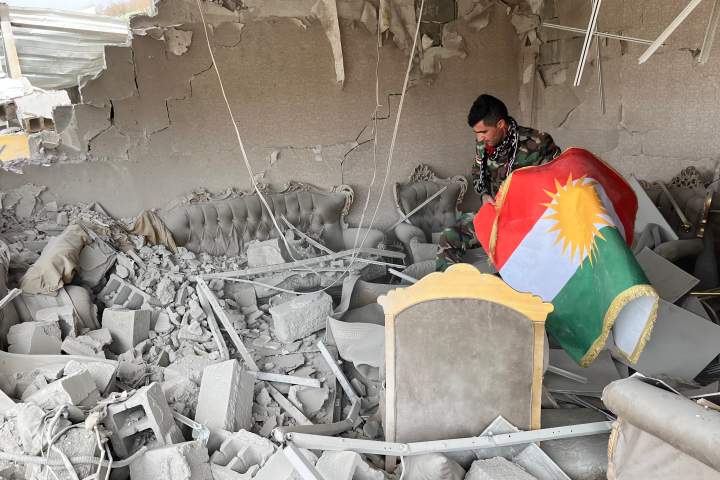
Iranian Kurdish fighters from the Kurdistan Freedom Party (PAK) are poised to engage in conflict against Iranian forces as tensions escalate in the region. The situation is particularly dire for the fighters based near Erbil, Iraq, where Iranian missile attacks have targeted their camps, raising concerns about their safety and operational readiness.
Military Readiness in Northern Iraq
The PAK base, marked by a rusted metal gate and a weathered flag, serves as a strategic point for Kurdish fighters. Ali Mahmoud Awara, a fighter dressed in camouflage attire, expressed his anxiety regarding the ongoing conflict in Iran. “All of our bases have been targeted by the Iranians,” he stated, highlighting the precarious nature of their operations. The PAK is one of several Kurdish groups operating in Iraq’s northern Kurdistan region, with aspirations for greater autonomy for the Kurdish people.
Awara, who crossed into Iraq over a decade ago to join the fight against the Islamic State, is now focused on confronting the Iranian regime. He articulated a deep desire to return to Iran to challenge the government he opposes, saying he longs for this “with my heart and my body.”
On March 4, 2023, Iranian forces launched missiles at the PAK base, specifically targeting the office of the group’s leader, Hussein Yazdanpanah. The attack resulted in the death of Kawan Rashidi, a veteran fighter, and injuries to three others. Fortunately, Yazdanpanah was not present during the strike. “They don’t want the Kurdish movement to progress,” Awara commented, reflecting the ongoing hostility from Iranian forces.
Debate Over Kurdish Involvement
The question of whether Kurdish fighters should actively engage in the current conflict has sparked significant debate. U.S. President Donald Trump initially supported the idea of Kurdish forces joining the fight against Tehran but later expressed reservations, emphasizing the complexities involved. Despite this, Kurdish leaders face increasing pressure due to the continued Iranian strikes on their facilities.
The White House has denied claims of CIA support for Kurdish fighters, yet there is evidence suggesting that American military actions have targeted Iranian positions in Kurdish regions. The U.S. may aim to create a more favorable environment for a potential Kurdish uprising, especially as Trump demands Iran’s “unconditional surrender.”
There are legitimate concerns that a U.S.-backed operation could ignite further civil unrest within Iran, potentially fracturing the nation along ethnic lines. Iraq, still recovering from past conflicts, remains wary of entering another war, particularly as its northern region faces increasing attacks from Iranian forces.
“That history makes the Kurdish groups cautious,” stated Yerevan Saeed, director of the Global Kurdish Initiative for Peace at American University. Kurdish factions are reportedly seeking political assurances from the Trump administration before making any commitments to engage in combat.
Khalil Kani Sanani, a spokesperson for the PAK, confirmed ongoing discussions with American and Israeli officials but noted that no formal coordination had yet been established. He expressed confidence in the Kurdish fighters’ readiness to act if called upon, asserting, “The Iranian regime’s days are numbered.”
Despite the Iranian missile and drone assaults, Sanani dismissed these actions as indicators of the Kurdish groups’ strength. “I think Iran is very weak,” he remarked.
While the Kurdish struggle against Iran is distinct from the broader U.S. and Israeli conflict, there is a shared adversary. Hassan Sharafi, a senior member of the Kurdish Democratic Party of Iran, emphasized that although his group has not crossed into Iran to join the fight, they have faced multiple attacks on their facilities in recent days.
As tensions continue to rise, Iranian President Masoud Pezeshkian announced a shift in strategy, calling for diplomatic resolutions and stating that Tehran would cease attacks on neighboring countries. Yet, amidst increasing hostilities, Awara remained vigilant, instructing reporters to evacuate his base due to missile warnings. Explosions were later reported in the vicinity, underscoring the volatile environment.
In a statement, Masoud Barzani, the President of the Kurdistan Region, emphasized the limits of patience and restraint, warning that continued provocations could lead to severe consequences. Kurdish factions have united in a pledge to sustain their struggle against the Iranian regime, indicating their commitment to the cause.
As Awara and his comrades await further directives from their leaders, he conveyed a sense of readiness: “We are prepared for fighting. The Kurdish people need freedom. We are waiting.”










Morris Churches Unite for Annual Good Friday Walk With the Cross

Chloe Zhao’s ‘Buffy’ Reboot Cancelled: Sarah Michelle Gellar Speaks Out

Essential Ingredients for Life Found in Ryugu Asteroid Samples

Urgent Rescue: NSR Airlifts Injured Climber from Nanaimo

Riverside Heart Ball Achieves Record $815,000 for Mental Health

Cognizant Launches AI Factory to Enhance Enterprise AI Scalability

Samsung’s Galaxy Watch 9 to Feature Larger Battery Than Before

Toronto’s AIDS Memorial Faces Potential Redesign Amid Community Concerns

Bayern Munich Loses Luis Díaz Red Card Appeal Despite Referee’s Admission

Secwepemc First Nation Seeks Aboriginal Title Over Kamloops Area

Fatal Crash on Highway 11 Claims Three Lives, Major Closure Ongoing

Manitoba’s Burger Champion Shines Again Amid Dining Innovations

Urgent Fire Erupts at Salvation Army on Christmas Evening

Canadian Curler E.J. Harnden Announces Retirement from Competition

Scientists Unearth Ancient Antarctic Ice to Unlock Climate Secrets

Trump and McCormick to Announce $70 Billion Energy Investments

Minister Faces Scrutiny Over Delayed Foreign Interference Watchdog Appointment

Four Astronauts Return to Earth After International Space Station Mission
-
 Politics5 months ago
Secwepemc First Nation Seeks Aboriginal Title Over Kamloops Area
-
 Top Stories3 months ago
Fatal Crash on Highway 11 Claims Three Lives, Major Closure Ongoing
-
 Lifestyle7 months ago
Manitoba’s Burger Champion Shines Again Amid Dining Innovations
-
 Top Stories3 months ago
Urgent Fire Erupts at Salvation Army on Christmas Evening
-
 Sports3 months ago
Canadian Curler E.J. Harnden Announces Retirement from Competition
-
 World8 months ago
Scientists Unearth Ancient Antarctic Ice to Unlock Climate Secrets
-
 Entertainment9 months ago
Trump and McCormick to Announce $70 Billion Energy Investments
-
 World5 months ago
Minister Faces Scrutiny Over Delayed Foreign Interference Watchdog Appointment
-
 Science9 months ago
Four Astronauts Return to Earth After International Space Station Mission
-
 Lifestyle9 months ago
TransLink Launches Food Truck Program to Boost Revenue in Vancouver
-

 Lifestyle8 months ago
Monika Hibbs Unveils Acres Market & Interiors in Major Rebrand
-
 World1 month ago
Ranchman’s Cookhouse & Dancehall to Relocate by Early 2027