
World
Israeli-Canadians Divided Over Netanyahu’s Leadership Ahead of Elections

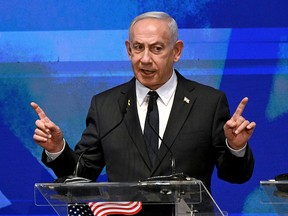
Benjamin Netanyahu faces a divided electorate as Israel approaches its next elections, scheduled for no later than October 27, 2026. The prime minister, who has been a dominant figure in Israeli politics for over three decades, must navigate a complex political landscape amid ongoing concerns regarding his leadership during the recent Gaza conflict. The political atmosphere is tense, especially among the approximately 35,000 Israeli-Canadians who hold strong opinions about his governance.
Public sentiment in Israel is sharply polarized regarding Netanyahu’s performance, particularly following the Hamas-led attacks on October 7, 2023. Opinions among Israeli-Canadians reflect a mix of admiration and criticism. Meir Balofsky, 49, an Israeli who moved from Toronto to Ramat Gan, stated, “To say it’s complicated is an understatement.” He acknowledges Netanyahu’s oratory skills and ability to maintain relations with the United States but expresses concern about the tarnished image of Israel under Netanyahu’s leadership. “The reality is that the world opinion of Bibi is that he is a monster, and Israel is now a pariah state,” he added.
Ahuva Balofsky, Meir’s wife, noted that Netanyahu’s long tenure has created a situation where he feels he alone can lead the country effectively. “He doesn’t trust anyone else’s ability to do what he can do,” she said. While she believes he remains a better candidate than others available, she acknowledges the troubling implications of his approach to leadership.
Netanyahu, who first became prime minister in 1996 and returned to power multiple times since, has been navigating a corruption trial that has further complicated his political standing. Recently, he asked Israeli President Isaac Herzog for a pardon, arguing that a swift conclusion to the trial would help promote national reconciliation.
Despite their criticisms, some Israeli-Canadians maintain a nuanced view of Netanyahu. Ben Waxman, 64, a tech writer from Ariel, expressed mixed feelings. “He is a true Zionist in every sense of the word,” Waxman stated, while also criticizing Netanyahu’s dealings with religious parties and lack of attention to issues surrounding religion and state. “For concerned citizens, it can be infuriating that he has no principles in these areas,” he added.
Shai Reef, a former Torontonian now living in Israel, remarked that Netanyahu is currently the best option available, citing his ability to navigate complex geopolitical landscapes. “There’s no other political leader close to the prime minister’s office with both an ideological compass and the ability to navigate the geopolitical landscape,” he stated. Nonetheless, he expressed concern over Netanyahu’s economic policies and his rhetoric regarding “Judeo-Christian values,” which he described as colonialist.
The perspectives on Netanyahu’s leadership among Israeli-Canadians underscore the challenges he faces ahead of the elections. Sahar Silverman, 27, who moved from Toronto to Jerusalem shortly after the Hamas attacks, believes Netanyahu must make more independent decisions without succumbing to external pressures, particularly from the United States.
This sentiment is echoed by Israeli politician Amit Halevi, a member of Netanyahu’s Likud Party. Halevi criticized the recent U.S.-backed ceasefire agreement regarding Gaza, asserting that Israel was pressured into the deal. “What every nation does in a war. Victory. To fight and to win,” he stated emphatically.
As public opinion grows increasingly complex, Israeli-Canadians are examining their connections to Israel and its leadership. Max Lightstone, 31, an engineer who relocated to Jerusalem, offered a critical view of Netanyahu, suggesting that his primary focus is self-preservation. “He has failed on both security and diplomatic fronts, bringing Israel to the lowest level of safety and PR,” Lightstone contended.
Jack Benaim, 44, a Torontonian who has lived in Tel Aviv, expressed frustration with Netanyahu’s perceived avoidance of accountability. He highlighted the prime minister’s lack of engagement with the families of hostages in Gaza, suggesting that Netanyahu has politicized their suffering instead of addressing their needs directly.
As Israel prepares for its upcoming elections, the divisions among Israeli-Canadians reflect broader uncertainties regarding Netanyahu’s future and the direction of Israeli politics. The discussions surrounding his leadership are not just academic; they resonate deeply within the fabric of Israeli society and shape the dialogue of a nation at a critical juncture.











Toronto Police Seek Urgent $93.8 Million Budget Boost for 2026

Culture Minister Pushes to Remove Religious Hate Speech Exemption

Raptors Snap Losing Streak with Narrow Victory Over Trail Blazers

Ontario to Release Delayed EQAO Scores Amid Scrutiny

Israeli-Canadians Divided Over Netanyahu’s Leadership Ahead of Elections

Congolese Refugee in Kitchener Avoids Deportation After Assault Charges

Alberta Moves Forward with Stringent Food Safety Legislation

Off-Duty Officer Involved in Serious Collision with Senior Citizen

Urgent: Schools Closed, 19,000 Without Power as Storm Hits Nova Scotia

Secwepemc First Nation Seeks Aboriginal Title Over Kamloops Area

Scientists Unearth Ancient Antarctic Ice to Unlock Climate Secrets

Trump and McCormick to Announce $70 Billion Energy Investments

Four Astronauts Return to Earth After International Space Station Mission

TransLink Launches Food Truck Program to Boost Revenue in Vancouver

Apple Notes Enhances Functionality with Markdown Support in macOS 26

Manitoba’s Burger Champion Shines Again Amid Dining Innovations

Urgent Update: Fatal Crash on Highway 99 Claims Life of Pitt Meadows Man

Ukrainian Tennis Star Elina Svitolina Faces Death Threats Online
-
 Politics4 weeks ago
Secwepemc First Nation Seeks Aboriginal Title Over Kamloops Area
-
 World5 months ago
Scientists Unearth Ancient Antarctic Ice to Unlock Climate Secrets
-
 Entertainment5 months ago
Trump and McCormick to Announce $70 Billion Energy Investments
-
 Science5 months ago
Four Astronauts Return to Earth After International Space Station Mission
-
 Lifestyle5 months ago
TransLink Launches Food Truck Program to Boost Revenue in Vancouver
-
 Technology3 months ago
Apple Notes Enhances Functionality with Markdown Support in macOS 26
-
 Lifestyle3 months ago
Manitoba’s Burger Champion Shines Again Amid Dining Innovations
-
 Top Stories2 months ago
Urgent Update: Fatal Crash on Highway 99 Claims Life of Pitt Meadows Man
-
 Politics4 months ago
Ukrainian Tennis Star Elina Svitolina Faces Death Threats Online
-

 Sports5 months ago
Search Underway for Missing Hunter Amid Hokkaido Bear Emergency
-
 Politics5 months ago
Carney Engages First Nations Leaders at Development Law Summit
-

 Technology5 months ago
Frosthaven Launches Early Access on July 31, 2025