
World
Lebanese Families Seek Shelter as Government Condemns Hezbollah Strikes

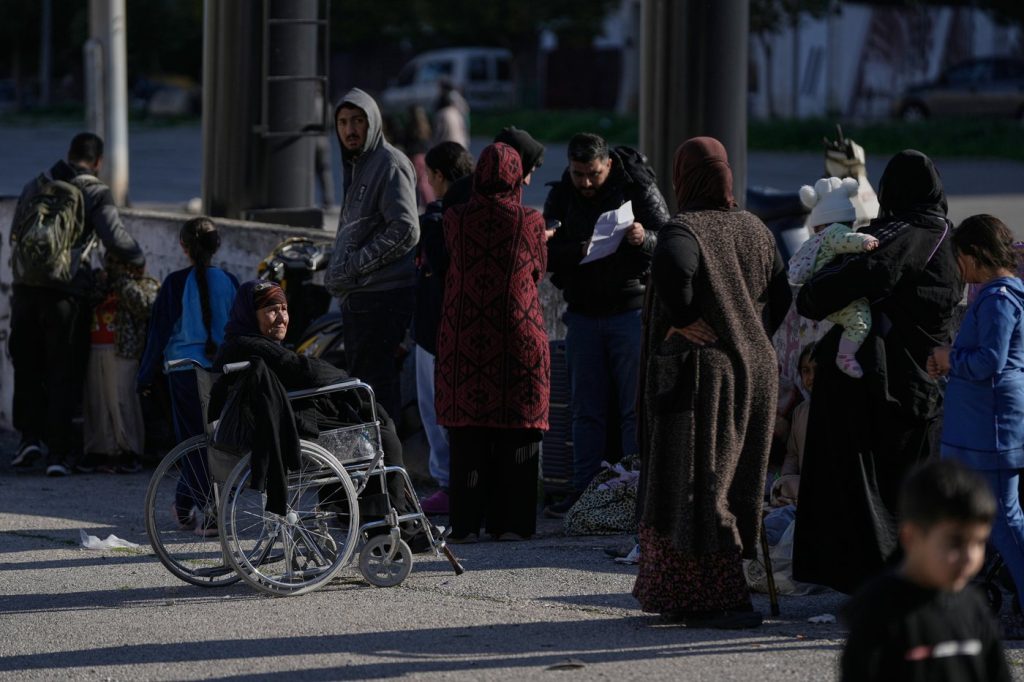
Residents in southern Lebanon and Beirut’s suburbs are fleeing their homes as the situation escalates between Israel and the Iran-backed militant group, Hezbollah. This surge in violence has led to at least 31 fatalities and 149 injuries due to recent airstrikes in the region, according to the Lebanese Health Ministry. In light of these events, the Lebanese government has deemed Hezbollah’s actions illegal and is demanding the group disarm.
Following a series of intense strikes by Israel—its most severe in over a year—families have sought refuge in schools across Lebanon’s capital. Highways were congested with individuals attempting to escape the violence, with many arriving at makeshift shelters carrying mattresses and personal belongings. Some families gathered outside schools, while volunteers registered their names and organized spaces inside.
Hussein Abu Ali, a resident from a southern Beirut suburb, recounted the harrowing moment the strikes occurred. “My son began shaking and crying,” he said. “Where are you supposed to go?” He described how he initially stepped outside, only to retreat in fear of stray gunfire before gathering his children to leave.
Another displaced individual, Nadia Al-Salman from the town of Majdal Zoun, expressed her determination despite the chaos. “We left our homes not out of fear or terror of the United States, but to fulfill our religious and legal duty to protect ourselves,” she stated defiantly. “They do not intimidate or frighten us.”
The current conflict has roots in a broader regional struggle, especially following the October 7, 2023 Hamas attack on southern Israel, which ignited a new wave of violence in Gaza. In September 2024, the situation escalated into a full-scale war, displacing over a million people in Lebanon. Many have yet to return home due to the ongoing conflict, particularly in southern villages that remain devastated.
In a statement, Hezbollah claimed its missile strikes were retaliatory actions against Israel, particularly in response to the recent killing of Iran’s Supreme Leader Ali Khamenei. The group characterized its response as a legitimate act of defense against repeated Israeli aggressions. Conversely, the Lebanese government has firmly rejected Hezbollah’s military activities, asserting that these should fall under state authority.
During an emergency Cabinet meeting, Lebanese Prime Minister Nawaf Salam articulated the government’s position, emphasizing that only the state should control military decisions. He announced that Hezbollah’s military actions are banned going forward and called upon security agencies to prevent further missile launches from Lebanese territory.
In a significant warning, the Israeli military advised residents in approximately 50 communities across southern and eastern Lebanon to evacuate. Military spokesman Brigadier General Effie Defrin indicated that Israel is considering all potential responses, including a possible ground invasion of Lebanon. He underscored that Hezbollah would face severe consequences for its actions, noting that over 100,000 reservists have been called up since the latest round of hostilities began.
The unfolding crisis in Lebanon highlights the complex interplay of regional politics, militant actions, and civilian safety, as families grapple with the immediate dangers of conflict while seeking security in makeshift shelters. As the situation develops, the focus remains on the humanitarian impact and the broader implications for stability in the region.










Morris Churches Unite for Annual Good Friday Walk With the Cross

Chloe Zhao’s ‘Buffy’ Reboot Cancelled: Sarah Michelle Gellar Speaks Out

Essential Ingredients for Life Found in Ryugu Asteroid Samples

Urgent Rescue: NSR Airlifts Injured Climber from Nanaimo

Riverside Heart Ball Achieves Record $815,000 for Mental Health

Cognizant Launches AI Factory to Enhance Enterprise AI Scalability

Samsung’s Galaxy Watch 9 to Feature Larger Battery Than Before

Toronto’s AIDS Memorial Faces Potential Redesign Amid Community Concerns

Bayern Munich Loses Luis Díaz Red Card Appeal Despite Referee’s Admission

Secwepemc First Nation Seeks Aboriginal Title Over Kamloops Area

Fatal Crash on Highway 11 Claims Three Lives, Major Closure Ongoing

Manitoba’s Burger Champion Shines Again Amid Dining Innovations

Canadian Curler E.J. Harnden Announces Retirement from Competition

Urgent Fire Erupts at Salvation Army on Christmas Evening

Scientists Unearth Ancient Antarctic Ice to Unlock Climate Secrets

Minister Faces Scrutiny Over Delayed Foreign Interference Watchdog Appointment

Trump and McCormick to Announce $70 Billion Energy Investments

Four Astronauts Return to Earth After International Space Station Mission
-
 Politics5 months ago
Secwepemc First Nation Seeks Aboriginal Title Over Kamloops Area
-
 Top Stories4 months ago
Fatal Crash on Highway 11 Claims Three Lives, Major Closure Ongoing
-
 Lifestyle7 months ago
Manitoba’s Burger Champion Shines Again Amid Dining Innovations
-
 Sports3 months ago
Canadian Curler E.J. Harnden Announces Retirement from Competition
-
 Top Stories3 months ago
Urgent Fire Erupts at Salvation Army on Christmas Evening
-
 World9 months ago
Scientists Unearth Ancient Antarctic Ice to Unlock Climate Secrets
-
 World5 months ago
Minister Faces Scrutiny Over Delayed Foreign Interference Watchdog Appointment
-
 Entertainment9 months ago
Trump and McCormick to Announce $70 Billion Energy Investments
-
 Science9 months ago
Four Astronauts Return to Earth After International Space Station Mission
-

 Lifestyle9 months ago
TransLink Launches Food Truck Program to Boost Revenue in Vancouver
-

 Lifestyle9 months ago
Monika Hibbs Unveils Acres Market & Interiors in Major Rebrand
-

 World1 month ago
Ranchman’s Cookhouse & Dancehall to Relocate by Early 2027