
World
Lockheed Martin’s X-59 Could Redefine Supersonic Flight

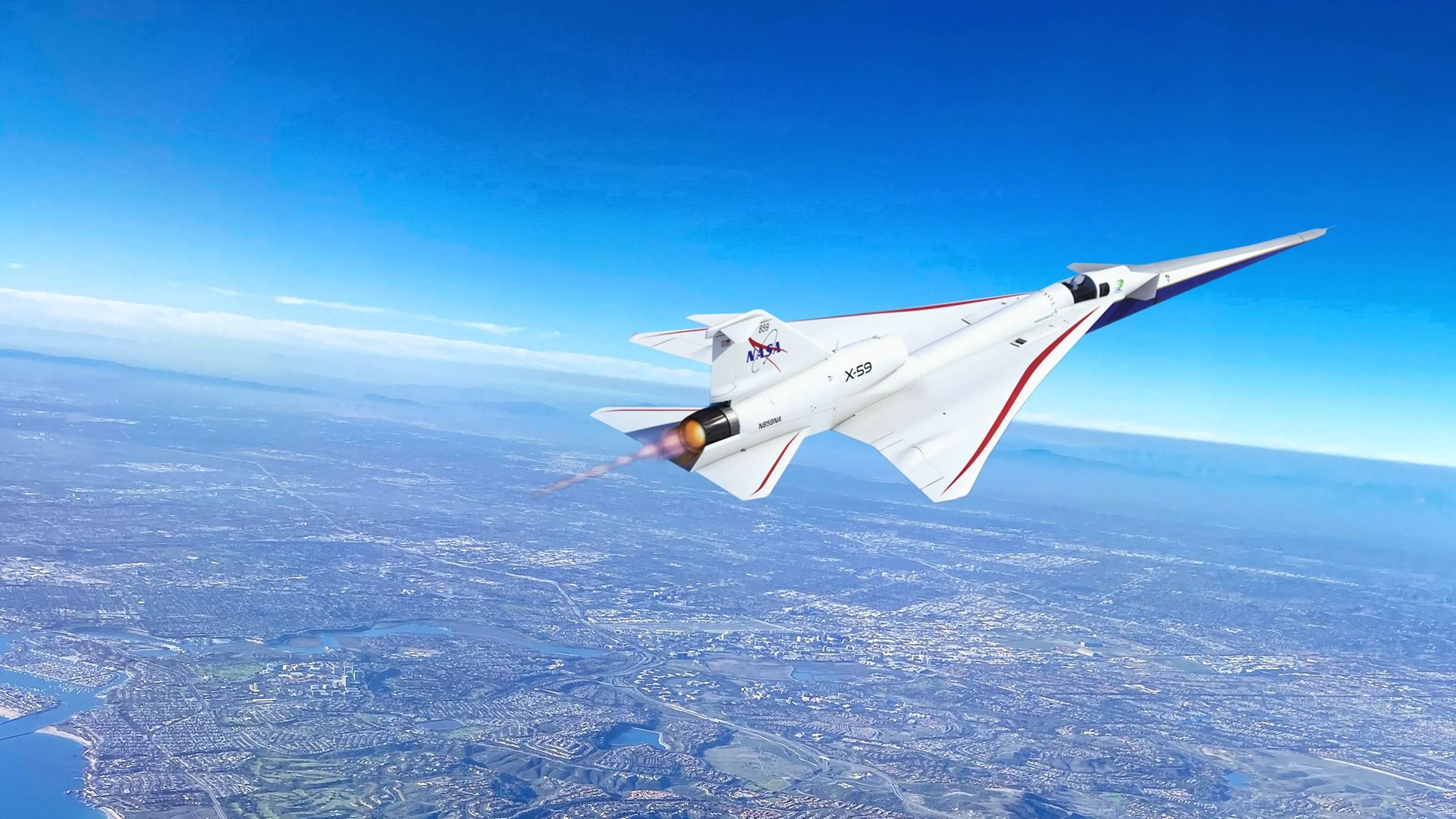
Lockheed Martin is nearing the completion of the X-59 Quesst, a groundbreaking supersonic aircraft developed for NASA. Unlike traditional supersonic jets that prioritize speed, the X-59 focuses on noise reduction, aiming to transform the disruptive sonic boom into a more acceptable sonic “thump.” The implications of this technology could significantly impact the aviation industry, particularly for established manufacturers like Boeing.
Understanding the X-59 Quesst
The X-59 is a single-pilot experimental aircraft designed by Lockheed Martin’s Skunk Works for NASA’s Quiet SuperSonic Technology (Quesst) mission. This mission seeks to explore advancements in quiet supersonic flight, enabling the X-59 to fly at speeds of Mach 1.42 while minimizing noise pollution for those on the ground. With a length of approximately 100 feet (30.4 meters) and a wingspan of about 29.5 feet (9 meters), the X-59 has a maximum takeoff weight of 14.7 tonnes. It is powered by a single General Electric F414 engine, which features afterburning capability.
Currently undergoing ground testing, the X-59 completed its initial self-powered taxi test in July 2025, followed by successful maximum afterburner engine runs. These tests confirm that the engine can produce the necessary thrust for supersonic flight while integrating seamlessly with the aircraft’s systems. Following the ground tests, NASA plans to conduct flight tests over populated areas to assess public response to the aircraft’s sonic “thumps.”
The Significance of Noise Reduction
The X-59’s development addresses a significant barrier to supersonic flight: the sonic boom, which produces noise levels between 110 and 135 decibels, comparable to a chainsaw. By utilizing an elongated and sharply tapered nose, along with canards and a carefully contoured fuselage, the design aims to spread shockwaves generated during supersonic flight. This innovative approach could lead to a much quieter noise profile, similar to the sound of a car door closing.
To support community testing, the X-59 is equipped with sensors and microphones to gather extensive acoustic, aerodynamic, and environmental data. This data will be crucial in persuading regulators to reconsider existing bans on supersonic flights over land. If successful in demonstrating acceptable noise levels, the X-59 program could pave the way for new regulations, potentially allowing supersonic flights to resume over populated areas.
Boeing has a vested interest in the outcomes of this project. Historically, the company designed its 747 to serve as a cargo aircraft, anticipating that supersonic transports would eventually replace subsonic airliners. The failure of the Concorde and other supersonic models, largely attributed to bans on overland flights, has kept supersonic travel from becoming mainstream. The results of the X-59 could lead to a new generation of supersonic airliners that can legally fly above the speed of sound over land, posing a direct threat to Boeing and its competitor Airbus.
As the aviation industry evolves, the X-59 represents a pivotal moment. Its potential to enable supersonic flights over land could disrupt the current duopoly held by Boeing and Airbus, especially given Boeing’s ongoing financial struggles. With billions in losses and challenges in certifying new aircraft models, the company finds itself at a crossroads.
Potential Impact on the Aviation Landscape
The emergence of new players in the supersonic market could alter the competitive landscape significantly. If manufacturers can develop supersonic airliners with lower operating costs that can compete with subsonic models, it would drastically shift the dynamics of the industry. The current situation is reminiscent of the late 1950s when advancements in technology rendered jetliners more efficient and versatile than their propeller-driven counterparts.
Currently, the Boom Overture stands as the most serious contender in the supersonic transport space. This aircraft is designed to operate exclusively over water routes, producing a loud sonic boom and circumventing the challenges associated with overland supersonic flight. However, if the X-59 proves that quiet supersonic travel is feasible, the Overture could face significant market limitations.
Boom has developed a concept called “Boomless Cruise,” which claims that its Symphony engine can allow the Overture to cruise over land without an audible sonic boom under specific conditions. This approach may provide a temporary solution, yet it highlights the potential vulnerability of Boom’s strategy if the X-59 program validates the possibility of quiet supersonic flight.
The Lockheed Martin X-59 Quesst is one of the most critical experimental aircraft programs of the 21st century, and its findings could usher in a new era of supersonic travel. If successful, it could ultimately enable airliners to operate at supersonic speeds without the disruptive noise that has historically hampered this segment of aviation. As the world watches, Boeing may find itself at a disadvantage in responding to these emerging technologies, while Boom must reconsider its approach in light of the X-59’s potential to reshape the aviation market.











Oregon State Dominates Vermont 80-58, Ends Five-Game Skid

Scientists Reveal Brain’s Five Eras and New Dementia Vaccine

Study Reveals TikTok’s Role in Normalizing Youth Nicotine Pouches

SDI Group plc Reports Strong Earnings in Q2 2026 Call

Oregon State Secures 80-58 Victory Over Vermont in Dominant Performance

Carney-Smith MOU Reveals Disconnect Between Ambition and Reality

New Dad Nikita Tolopilo Leads Abbotsford to 2-1 Victory

Sentencing Hearing Paused for B.C. Man in Chelsey Gauthier Case

Vancouver Prepares for 2026 World Cup: Major Changes Ahead

Secwepemc First Nation Seeks Aboriginal Title Over Kamloops Area

Scientists Unearth Ancient Antarctic Ice to Unlock Climate Secrets

Trump and McCormick to Announce $70 Billion Energy Investments

Four Astronauts Return to Earth After International Space Station Mission

TransLink Launches Food Truck Program to Boost Revenue in Vancouver

Apple Notes Enhances Functionality with Markdown Support in macOS 26

Manitoba’s Burger Champion Shines Again Amid Dining Innovations

Urgent Update: Fatal Crash on Highway 99 Claims Life of Pitt Meadows Man

Ukrainian Tennis Star Elina Svitolina Faces Death Threats Online
-
 Politics4 weeks ago
Secwepemc First Nation Seeks Aboriginal Title Over Kamloops Area
-
 World5 months ago
Scientists Unearth Ancient Antarctic Ice to Unlock Climate Secrets
-
 Entertainment5 months ago
Trump and McCormick to Announce $70 Billion Energy Investments
-
 Science5 months ago
Four Astronauts Return to Earth After International Space Station Mission
-
 Lifestyle5 months ago
TransLink Launches Food Truck Program to Boost Revenue in Vancouver
-
 Technology3 months ago
Apple Notes Enhances Functionality with Markdown Support in macOS 26
-
 Lifestyle3 months ago
Manitoba’s Burger Champion Shines Again Amid Dining Innovations
-
 Top Stories2 months ago
Urgent Update: Fatal Crash on Highway 99 Claims Life of Pitt Meadows Man
-
 Politics4 months ago
Ukrainian Tennis Star Elina Svitolina Faces Death Threats Online
-

 Sports5 months ago
Search Underway for Missing Hunter Amid Hokkaido Bear Emergency
-

 Politics5 months ago
Carney Engages First Nations Leaders at Development Law Summit
-

 Technology5 months ago
Frosthaven Launches Early Access on July 31, 2025