
World
NDP MP Jenny Kwan Opposes U.S. Purchase of Armoured Vehicles

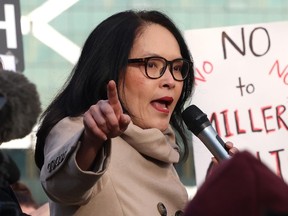
The New Democratic Party (NDP) Member of Parliament, Jenny Kwan, has raised concerns regarding a contract between the U.S. Immigration and Customs Enforcement (ICE) and a Canadian company for the purchase of armoured vehicles. The proposed deal involves $10 million CAD for the acquisition of twenty Roshel Senator vehicles, with Kwan advocating for intervention from the Canadian government to cancel the contract.
Kwan’s objections centre on human rights issues related to ICE’s operations. She expressed her views in an interview with Canadian Press, stating, “I think Canadians expect our industries and our government to uphold human rights domestically and internationally, and not enable the further militarization of an organization whose conduct already puts vulnerable people at great risk.” Her stance reflects a broader concern about the implications of selling military-grade equipment to a division of the Department of Homeland Security.
Details of the Contract and Vehicle Production
Despite Kwan’s protests, the vehicles in question are not manufactured in Canada. The Roshel facility in Brampton, Ontario, employs around 500 people; however, the vehicles set to be delivered to the American government are produced at Roshel’s facility in Michigan. The company confirmed in a brief statement, “Vehicles for the US government are built in the US.” This distinction raises questions about the impact of the contract on Canadian jobs, which Kwan’s critics argue is minimal since the production will occur solely in the United States.
The armoured vehicles are intended to bolster ICE’s capabilities in response to escalating violence against its agents. The Department of Homeland Security reported a significant increase in assaults on ICE personnel, with 238 incidents recorded between January 21, 2024, and November 21, 2024, compared to just 19 assaults during the same period in the previous year. Assistant Secretary Tricia McLaughlin highlighted the dangers faced by ICE agents, noting that threats against them have escalated, including bounties placed on their lives.
Kwan’s Political Position and Broader Implications
Kwan’s opposition to the sale has sparked debate about her political motives. Critics argue that her stance is influenced by her opposition to the policies of former President Donald Trump, particularly those related to immigration enforcement. They contend that her objections may stem more from ideological differences than from genuine concerns about human rights.
This incident is not the first time Kwan has faced scrutiny for her positions. She has previously supported the Irish band Kneecap, which has been associated with controversial political movements, further solidifying her reputation as a polarizing figure within Canadian politics.
As the situation develops, the implications of this contract extend beyond Canadian-American relations to larger discussions about military sales, human rights, and the role of law enforcement in society. Kwan’s vocal opposition underscores the complexities involved in international trade agreements, particularly when they intersect with contentious political issues.
The controversy surrounding the sale of these vehicles to ICE continues to provoke discussion about the responsibilities of Canadian industries and the government’s role in regulating arms sales and promoting human rights.












Morris Churches Unite for Annual Good Friday Walk With the Cross

Chloe Zhao’s ‘Buffy’ Reboot Cancelled: Sarah Michelle Gellar Speaks Out

Essential Ingredients for Life Found in Ryugu Asteroid Samples

Urgent Rescue: NSR Airlifts Injured Climber from Nanaimo

Riverside Heart Ball Achieves Record $815,000 for Mental Health

Cognizant Launches AI Factory to Enhance Enterprise AI Scalability

Samsung’s Galaxy Watch 9 to Feature Larger Battery Than Before

Toronto’s AIDS Memorial Faces Potential Redesign Amid Community Concerns

Bayern Munich Loses Luis Díaz Red Card Appeal Despite Referee’s Admission

Secwepemc First Nation Seeks Aboriginal Title Over Kamloops Area

Fatal Crash on Highway 11 Claims Three Lives, Major Closure Ongoing

Manitoba’s Burger Champion Shines Again Amid Dining Innovations

Canadian Curler E.J. Harnden Announces Retirement from Competition

Urgent Fire Erupts at Salvation Army on Christmas Evening

Scientists Unearth Ancient Antarctic Ice to Unlock Climate Secrets

Minister Faces Scrutiny Over Delayed Foreign Interference Watchdog Appointment

Trump and McCormick to Announce $70 Billion Energy Investments

Monika Hibbs Unveils Acres Market & Interiors in Major Rebrand
-
 Politics5 months ago
Secwepemc First Nation Seeks Aboriginal Title Over Kamloops Area
-
 Top Stories4 months ago
Fatal Crash on Highway 11 Claims Three Lives, Major Closure Ongoing
-
 Lifestyle7 months ago
Manitoba’s Burger Champion Shines Again Amid Dining Innovations
-
 Sports3 months ago
Canadian Curler E.J. Harnden Announces Retirement from Competition
-
 Top Stories4 months ago
Urgent Fire Erupts at Salvation Army on Christmas Evening
-
 World9 months ago
Scientists Unearth Ancient Antarctic Ice to Unlock Climate Secrets
-
 World5 months ago
Minister Faces Scrutiny Over Delayed Foreign Interference Watchdog Appointment
-
 Entertainment9 months ago
Trump and McCormick to Announce $70 Billion Energy Investments
-
 Lifestyle9 months ago
Monika Hibbs Unveils Acres Market & Interiors in Major Rebrand
-

 Science9 months ago
Four Astronauts Return to Earth After International Space Station Mission
-
 Lifestyle9 months ago
TransLink Launches Food Truck Program to Boost Revenue in Vancouver
-
 World1 month ago
Ranchman’s Cookhouse & Dancehall to Relocate by Early 2027