
World
Poilievre Questions Carney’s Commitment to New Pipeline Initiative

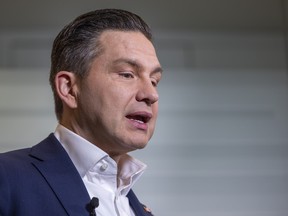
Pierre Poilievre, the leader of the Conservative Party of Canada, expressed skepticism regarding Mark Carney’s commitment to establishing a new pipeline in a recent year-end interview with journalist Brian Lilley. During the discussion, Poilievre addressed the implications of a memorandum of understanding (MOU) between the federal government and Alberta, highlighting both its potential benefits and drawbacks.
In the interview, Poilievre emphasized that he does not believe Carney, a prominent figure in finance and environmental issues, is genuinely invested in the pipeline project. “I think he is more focused on rhetoric than actual building,” Poilievre stated, underlining his concerns about the feasibility of new pipeline initiatives under current government policies.
Evaluating the MOU with Alberta
The MOU aims to enhance collaboration between the federal government and Alberta in various sectors, including energy and environmental sustainability. Poilievre acknowledged the importance of working with provincial governments but pointed out that the MOU could lead to regulatory complications. He argued that while the agreement may present opportunities for investment, it could also create obstacles for energy development in the region.
Poilievre voiced concerns that the deal could prioritize environmental regulations over economic growth. “We need to ensure that Alberta’s energy sector can thrive without excessive red tape,” he commented. This stance reflects a broader debate in Canada about balancing environmental responsibilities with economic interests, particularly in resource-rich provinces like Alberta.
Public Engagement and Discussion
As part of the interview, Lilley encouraged viewers to share their perspectives on the MOU and Carney’s role in the pipeline discussion. Poilievre’s opinions have sparked significant debate among the public, with many viewers taking to social media to express their thoughts.
The Conservative leader’s remarks come at a critical time for Canada’s energy sector, which is facing pressure to meet both domestic and international energy demands while adhering to environmental standards. The future of pipeline projects remains uncertain, and Poilievre’s comments highlight the complexities involved in navigating these issues.
For those interested in joining the conversation, letters to the editor can be submitted to [email protected], with a limit of 250 words. The public is invited to engage in this important dialogue about the future of energy in Canada.











Strategy Transforms into Leveraged Bitcoin Vehicle Amid $12.4B Loss

Ride App Faces Off Against Google Maps in Transport Challenge

Liam Draxl Secures Dramatic Davis Cup Victory for Canada

Canada Must Revise Education Strategies to Improve Math Scores

American Airlines: A Century of Evolution and Dominance

Doug Ford Rides Snowmobile to Support Muskoka Hospital Fundraising

Winnipeg’s Shivers & Shimmies Gala Features International Star THIS WEEKEND

Money Williams Leads Montana to Last-Minute 73-68 Win Over Idaho

Seahawks Logo Sparks Cultural Awakening Ahead of Super Bowl

Secwepemc First Nation Seeks Aboriginal Title Over Kamloops Area

Scientists Unearth Ancient Antarctic Ice to Unlock Climate Secrets

Urgent Fire Erupts at Salvation Army on Christmas Evening

Canadian Curler E.J. Harnden Announces Retirement from Competition

Manitoba’s Burger Champion Shines Again Amid Dining Innovations

Fatal Crash on Highway 11 Claims Three Lives, Major Closure Ongoing

Trump and McCormick to Announce $70 Billion Energy Investments

Four Astronauts Return to Earth After International Space Station Mission

TransLink Launches Food Truck Program to Boost Revenue in Vancouver
-
 Politics3 months ago
Secwepemc First Nation Seeks Aboriginal Title Over Kamloops Area
-
 World7 months ago
Scientists Unearth Ancient Antarctic Ice to Unlock Climate Secrets
-
 Top Stories1 month ago
Urgent Fire Erupts at Salvation Army on Christmas Evening
-
 Sports1 month ago
Canadian Curler E.J. Harnden Announces Retirement from Competition
-
 Lifestyle5 months ago
Manitoba’s Burger Champion Shines Again Amid Dining Innovations
-
 Top Stories2 months ago
Fatal Crash on Highway 11 Claims Three Lives, Major Closure Ongoing
-
 Entertainment7 months ago
Trump and McCormick to Announce $70 Billion Energy Investments
-
 Science7 months ago
Four Astronauts Return to Earth After International Space Station Mission
-
 Lifestyle7 months ago
TransLink Launches Food Truck Program to Boost Revenue in Vancouver
-

 Technology5 months ago
Apple Notes Enhances Functionality with Markdown Support in macOS 26
-

 Top Stories1 month ago
Blue Jays Sign Kazuma Okamoto: Impact on Bo Bichette’s Future
-

 Top Stories2 months ago
NHL Teams Inquire About Marc-André Fleury’s Potential Return