
World
Ski Jumping Officials Deny Rumours of Performance-Enhancing Practices

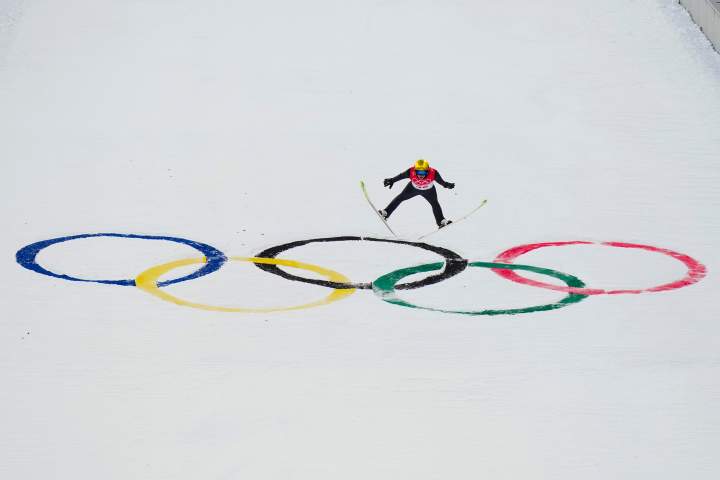
Rumours surrounding ski jumpers allegedly using paraffin or hyaluronic acid for penis enlargement to gain a competitive edge have been strongly dismissed by officials. The World Anti-Doping Agency (WADA) announced on March 1, 2024, that it would monitor any indications of this practice among male athletes, following a report by Germany’s Bild. This report suggested that some ski jumpers might attempt to manipulate the measurement standards of their ski suits to enhance performance.
The International Ski Federation (FIS) quickly labeled these claims as “wild rumours,” asserting there has been no evidence to support the idea that athletes are engaging in such practices. Despite this denial, some within the sport, including Slovenia’s Cene Prevc, who earned a silver medal at the Beijing 2022 Olympics, indicated that discussions about the topic had circulated in the skiing community. Prevc stated in an interview with Reuters, “It is a topic that was spoken about quite a lot a month ago in the ski jumping world,” although he personally has never participated in or witnessed such actions.
The concern stems from the unique regulations governing ski jump suits, which are designed to be skin-tight. A jumper’s suit must fit precisely to avoid any extra material that could provide an advantage during jumps. Interestingly, the crotch area of these suits can extend to the athlete’s genitals, meaning an increase in size could potentially create additional lift while airborne.
While no direct evidence has emerged to confirm the practice, elite ski jumpers have voiced their opinions on the implications. Eirin Maria Kvandal, a female ski jumper from Norway, expressed her disapproval, stating, “I think that’s horrible. That’s a big step to take to get an advantage.”
Scientific analysis supports the notion that even minor adjustments in suit fit can significantly impact performance. A study published in the journal Frontiers demonstrated that small changes in fabric can influence jump distance. According to Marco Belloli, director of the mechanics department at Politecnico University, “An extra centimeter of fabric can add as much as 2.8 meters to a jump.” He elaborated that increased surface area, akin to a glider’s wings, allows athletes to travel farther.
The issue of suit manipulation is not new to the sport. Last year, two Norwegian Olympic medallists, Marius Lindvik and Johann Andre Forfang, faced suspensions for three months after their team was found to have altered suit seams at the 2025 World Ski Championships. This history of sanctions underscores the seriousness with which ski jumping authorities treat any potential advantages gained through suit adjustments.
As the Winter Olympics approach, the conversation surrounding athlete integrity and fair play continues to be a pressing concern. The swift response from WADA and FIS aims to reassure the public that they are vigilant against any form of cheating in the sport.













Morris Churches Unite for Annual Good Friday Walk With the Cross

Chloe Zhao’s ‘Buffy’ Reboot Cancelled: Sarah Michelle Gellar Speaks Out

Essential Ingredients for Life Found in Ryugu Asteroid Samples

Urgent Rescue: NSR Airlifts Injured Climber from Nanaimo

Riverside Heart Ball Achieves Record $815,000 for Mental Health

Cognizant Launches AI Factory to Enhance Enterprise AI Scalability

Samsung’s Galaxy Watch 9 to Feature Larger Battery Than Before

Toronto’s AIDS Memorial Faces Potential Redesign Amid Community Concerns

Bayern Munich Loses Luis Díaz Red Card Appeal Despite Referee’s Admission

Secwepemc First Nation Seeks Aboriginal Title Over Kamloops Area

Fatal Crash on Highway 11 Claims Three Lives, Major Closure Ongoing

Manitoba’s Burger Champion Shines Again Amid Dining Innovations

Canadian Curler E.J. Harnden Announces Retirement from Competition

Urgent Fire Erupts at Salvation Army on Christmas Evening

Scientists Unearth Ancient Antarctic Ice to Unlock Climate Secrets

Trump and McCormick to Announce $70 Billion Energy Investments

Minister Faces Scrutiny Over Delayed Foreign Interference Watchdog Appointment

Four Astronauts Return to Earth After International Space Station Mission
-
 Politics5 months ago
Secwepemc First Nation Seeks Aboriginal Title Over Kamloops Area
-
 Top Stories4 months ago
Fatal Crash on Highway 11 Claims Three Lives, Major Closure Ongoing
-
 Lifestyle7 months ago
Manitoba’s Burger Champion Shines Again Amid Dining Innovations
-
 Sports3 months ago
Canadian Curler E.J. Harnden Announces Retirement from Competition
-
 Top Stories3 months ago
Urgent Fire Erupts at Salvation Army on Christmas Evening
-
 World9 months ago
Scientists Unearth Ancient Antarctic Ice to Unlock Climate Secrets
-
 Entertainment9 months ago
Trump and McCormick to Announce $70 Billion Energy Investments
-
 World5 months ago
Minister Faces Scrutiny Over Delayed Foreign Interference Watchdog Appointment
-
 Science9 months ago
Four Astronauts Return to Earth After International Space Station Mission
-

 Lifestyle9 months ago
Monika Hibbs Unveils Acres Market & Interiors in Major Rebrand
-

 Lifestyle9 months ago
TransLink Launches Food Truck Program to Boost Revenue in Vancouver
-

 World1 month ago
Ranchman’s Cookhouse & Dancehall to Relocate by Early 2027