
World
South African Rowers Make History at Head of the Charles Regatta

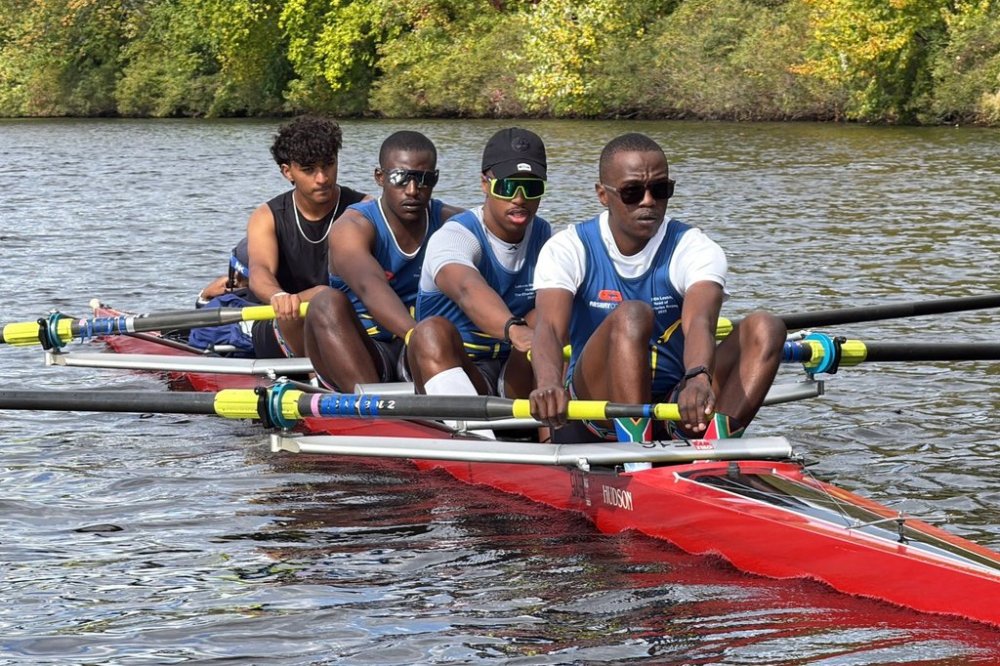
Four South African rowers are making history this weekend at the prestigious Head of the Charles Regatta in Boston, becoming the first crew of color from their country to compete on an international stage. Their participation symbolizes a significant step towards increasing diversity in a sport traditionally dominated by white athletes, marking a shift towards a more inclusive future for rowing.
The Head of the Charles Regatta, which has been held for over 60 years, has seen a growing commitment to expanding access for underrepresented communities in recent years. The sport of rowing has deep roots in colonial history, often excluding marginalized populations from participation in recreational water activities. Advocates worldwide have been working to change this narrative, leading to several groundbreaking entries at this year’s regatta, including the first all-Black women’s 8+ crew from the U.S. and an indigenous 4+ team.
Among the South African competitors is Lwazi-Tsebo Zwane, a 23-year-old from Germiston, who expressed the weight of their historic presence at the event. “It takes a lot to be at this regatta,” Zwane said, competing in the Men’s Championship 4+ event. He emphasized the long-lasting impact of apartheid policies that resulted in economic inequality, shaping their experiences. “There’s been a lot of pitfalls, there’s been a lot of barriers,” he added, highlighting their role as trailblazers for younger athletes.
The challenges faced by rowers of color extend beyond societal issues, as Arshay Cooper, founder of a foundation supporting the South African crew, illustrated. He noted that lack of access to waterways and the high costs associated with rowing equipment hinder opportunities for many aspiring athletes. “There’s structural limitations, there’s neglect,” Cooper stated, reflecting on his own journey as a member of America’s first all-Black high school rowing team.
Rowing, which gained prominence in the 19th century among elite British and American institutions, remains largely exclusive. A 2016 analysis by U.S. Rowing found that the typical rower is often perceived as being “white and from a middle or upper-class suburban community.” This lack of diversity is further underscored by a 2021 NCAA study, which found that only 2% of female collegiate rowers identified as Black.
While some public schools in both the U.S. and South Africa offer rowing programs, they often lack the resources available to private institutions. Many high school athletes of color face outdated equipment and inexperienced coaching, making competition challenging.
Coach Michael Ortlepp shared the sacrifices made by university athletes in Cape Town, who often travel long distances from historically segregated areas to practice. The logistical difficulties include unreliable public transport and safety concerns. “Those are common stories; they’re not rare,” Ortlepp explained, noting that funding from Cooper’s foundation has helped provide transportation for athletes.
Zwane, who began rowing at age 14, described his journey to Boston, which involves multiple bus rides to reach the community rowing boathouse near Johannesburg. He reflected on the stark contrast between the facilities available to him back home and those in Boston, stating, “This is — from my perspective, from a lot of kids who understand how it is to grow up from my place — it’s a luxury.”
As the regatta unfolds, the South African crew embodies a broader movement towards inclusivity in sports. Their presence serves not only as inspiration for future generations but also as a catalyst for change within the rowing community. Zwane articulated this sentiment, saying, “It does feel a little bit disorientating to be in this environment… but it is always on the back of my head that this is not normal for me, but it is for somebody else.”
The efforts to promote diversity in rowing extend beyond competition. Last year, the regatta featured its first indigenous four, who drew attention to social issues by painting red hands on their oars to honor missing and murdered Indigenous women. This year, the urgency to showcase representation is heightened, especially following recent policy changes regarding diversity initiatives in the U.S.
Denise Aquino, co-founder of the nonprofit podcast Rowing in Color, noted that the visibility of diverse athletes is crucial. “It’s about the young people and people of all ages who will see these boats and feel not just resonance, but feel visibility and represented in the sport that we all love,” she said.
The participation of these South African rowers at the Head of the Charles is a testament to the progress being made in the realm of sports diversity. Their journey symbolizes hope and resilience, paving the way for future generations to break free from historical constraints and embrace the sport of rowing.













Calgary Referee Drew Fischer to Officiate MLS Cup Final Saturday

Mini Horse Nugget Begins Therapy Journey After Dog Mauling

Urgent: One Arrested After Downtown Prince George Apartment Fire

Filipino BC Urged for Immediate Transparency on Festival Funds

Saskatchewan Rejects NDP Bill to Limit Notwithstanding Clause Use

Calgary-Banff Hydrogen Rail Proposal Submitted for Urgent Fast-Tracking

FBI Arrests Suspect in 2016 Washington Pipe Bomb Case

Trevor Halford Takes Helm as Interim Leader of BC Conservatives

Marie Helene Juliette Assman: A Life Remembered, 1934-2025

Secwepemc First Nation Seeks Aboriginal Title Over Kamloops Area

Scientists Unearth Ancient Antarctic Ice to Unlock Climate Secrets

Trump and McCormick to Announce $70 Billion Energy Investments

Four Astronauts Return to Earth After International Space Station Mission

TransLink Launches Food Truck Program to Boost Revenue in Vancouver

Apple Notes Enhances Functionality with Markdown Support in macOS 26

Manitoba’s Burger Champion Shines Again Amid Dining Innovations

Urgent Update: Fatal Crash on Highway 99 Claims Life of Pitt Meadows Man

Ukrainian Tennis Star Elina Svitolina Faces Death Threats Online
-
 Politics4 weeks ago
Secwepemc First Nation Seeks Aboriginal Title Over Kamloops Area
-
 World5 months ago
Scientists Unearth Ancient Antarctic Ice to Unlock Climate Secrets
-
 Entertainment5 months ago
Trump and McCormick to Announce $70 Billion Energy Investments
-
 Science5 months ago
Four Astronauts Return to Earth After International Space Station Mission
-
 Lifestyle5 months ago
TransLink Launches Food Truck Program to Boost Revenue in Vancouver
-
 Technology3 months ago
Apple Notes Enhances Functionality with Markdown Support in macOS 26
-
 Lifestyle3 months ago
Manitoba’s Burger Champion Shines Again Amid Dining Innovations
-
 Top Stories2 months ago
Urgent Update: Fatal Crash on Highway 99 Claims Life of Pitt Meadows Man
-
 Politics4 months ago
Ukrainian Tennis Star Elina Svitolina Faces Death Threats Online
-

 Sports5 months ago
Search Underway for Missing Hunter Amid Hokkaido Bear Emergency
-

 Politics5 months ago
Carney Engages First Nations Leaders at Development Law Summit
-

 Technology5 months ago
Frosthaven Launches Early Access on July 31, 2025