
World
Southwest Airlines Plans New Cabin Changes, Including First Class

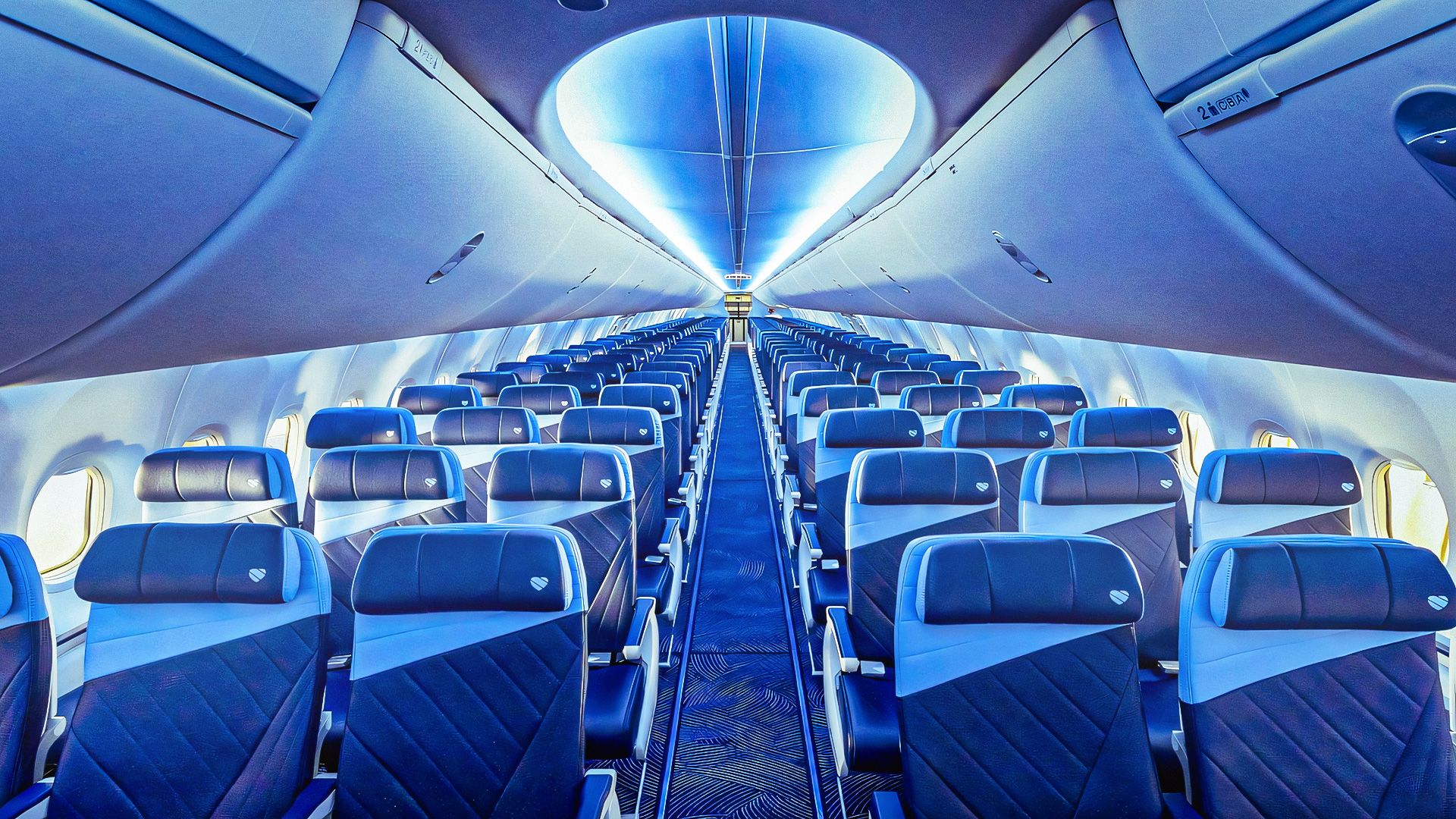
Southwest Airlines has recently completed a significant reconfiguration of its fleet, adding extra legroom seating across its Boeing 737 aircraft. The project, which wrapped up a week ahead of schedule in January 2026, marked a pivotal moment for the airline as it transitioned from its traditional open seating policy to a more structured seating arrangement that now includes premium options.
The changes predominantly affect the airline’s 737 MAX 8s and 737-800s, which have been modified to incorporate a dedicated section for extra legroom seating. While these aircraft maintain their maximum capacity of 175 seats, 45 of them now feature an impressive seat pitch of 36 inches (91.44 centimeters). The older 737-700s, previously configured with 143 seats, have reduced their capacity to 137 seats to accommodate this new offering, with 40 of these seats boasting a generous pitch of 38 inches (96.52 centimeters).
Transitioning From Open Seating to Premium Options
The final Southwest flight with the open seating arrangement departed from Honolulu to Los Angeles on January 26, 2026, marking the end of an era for the airline. With this transition, passengers can now select specific seats when booking online, changing the way travelers experience Southwest Airlines. The new layout includes the Recaro R2 seats on the latest 737 MAX 8 deliveries, while older aircraft still feature the Collins Meridian and Innovator II seats.
As part of this fleet-wide modification, Southwest Airlines has also committed to retrofitting its aircraft with in-seat power and Wi-Fi. However, seatback entertainment systems are unlikely to be implemented, aligning with industry trends where airlines focus on enhancing digital connectivity rather than traditional in-flight entertainment.
In a move towards further modernization, Southwest Airlines’ CEO Bob Jordan has indicated that the airline is seriously considering the addition of a first-class cabin on its aircraft. Although no official announcement has been made, Jordan’s comments suggest that this change is not a matter of “if,” but “when.”
The Economic Landscape and Competitive Pressures
The shift towards premium seating is part of a broader trend within the airline industry where budget carriers are moving upmarket to capture higher profit margins. Airlines like Delta Air Lines, United Airlines, and Alaska Airlines have successfully tapped into the lucrative premium seating market, leaving Southwest and other budget airlines trailing. The changing landscape is driven by the increasing importance of loyalty programs, which have become essential revenue sources for airlines.
Elliott Investment, a prominent shareholder in Southwest, has played a crucial role in pushing the airline towards these changes. Since the company’s involvement began in June 2024, Southwest has adopted a more traditional airline model, introducing assigned seats and charging for previously complimentary services like checked baggage. While these changes have faced criticism from long-time loyal customers, they reflect the airline’s need to adapt to a competitive market.
The demand for premium seating is evident, as travelers increasingly seek higher-quality experiences. This trend is further emphasized by competitors like JetBlue, which is developing a domestic first-class product called “Mini Mint.” For Southwest, the introduction of a first-class cabin would not only enhance its appeal but also provide a critical boost to its Rapid Rewards loyalty program.
As the airline industry evolves, Southwest Airlines is positioned to align itself with more established carriers by offering a diverse range of seating options. With the recent changes implemented and the potential introduction of first-class seating, Southwest is taking significant steps towards redefining its brand image and catering to a broader customer base.
In conclusion, while Southwest Airlines has made notable advances in its fleet configuration, the future will depend on how effectively it can integrate premium offerings without alienating its core customers. The aviation landscape is changing, and Southwest’s next moves will be crucial in determining its position in a competitive market.












Morris Churches Unite for Annual Good Friday Walk With the Cross

Chloe Zhao’s ‘Buffy’ Reboot Cancelled: Sarah Michelle Gellar Speaks Out

Essential Ingredients for Life Found in Ryugu Asteroid Samples

Urgent Rescue: NSR Airlifts Injured Climber from Nanaimo

Riverside Heart Ball Achieves Record $815,000 for Mental Health

Cognizant Launches AI Factory to Enhance Enterprise AI Scalability

Samsung’s Galaxy Watch 9 to Feature Larger Battery Than Before

Toronto’s AIDS Memorial Faces Potential Redesign Amid Community Concerns

Bayern Munich Loses Luis Díaz Red Card Appeal Despite Referee’s Admission

Secwepemc First Nation Seeks Aboriginal Title Over Kamloops Area

Fatal Crash on Highway 11 Claims Three Lives, Major Closure Ongoing

Manitoba’s Burger Champion Shines Again Amid Dining Innovations

Canadian Curler E.J. Harnden Announces Retirement from Competition

Urgent Fire Erupts at Salvation Army on Christmas Evening

Scientists Unearth Ancient Antarctic Ice to Unlock Climate Secrets

Minister Faces Scrutiny Over Delayed Foreign Interference Watchdog Appointment

Trump and McCormick to Announce $70 Billion Energy Investments

Monika Hibbs Unveils Acres Market & Interiors in Major Rebrand
-
 Politics5 months ago
Secwepemc First Nation Seeks Aboriginal Title Over Kamloops Area
-
 Top Stories4 months ago
Fatal Crash on Highway 11 Claims Three Lives, Major Closure Ongoing
-
 Lifestyle7 months ago
Manitoba’s Burger Champion Shines Again Amid Dining Innovations
-
 Sports3 months ago
Canadian Curler E.J. Harnden Announces Retirement from Competition
-
 Top Stories4 months ago
Urgent Fire Erupts at Salvation Army on Christmas Evening
-
 World9 months ago
Scientists Unearth Ancient Antarctic Ice to Unlock Climate Secrets
-
 World5 months ago
Minister Faces Scrutiny Over Delayed Foreign Interference Watchdog Appointment
-
 Entertainment9 months ago
Trump and McCormick to Announce $70 Billion Energy Investments
-
 Lifestyle9 months ago
Monika Hibbs Unveils Acres Market & Interiors in Major Rebrand
-

 Science9 months ago
Four Astronauts Return to Earth After International Space Station Mission
-

 Lifestyle9 months ago
TransLink Launches Food Truck Program to Boost Revenue in Vancouver
-

 World1 month ago
Ranchman’s Cookhouse & Dancehall to Relocate by Early 2027