
World
The F-4 Phantom II: A Legacy of Speed and Adaptation

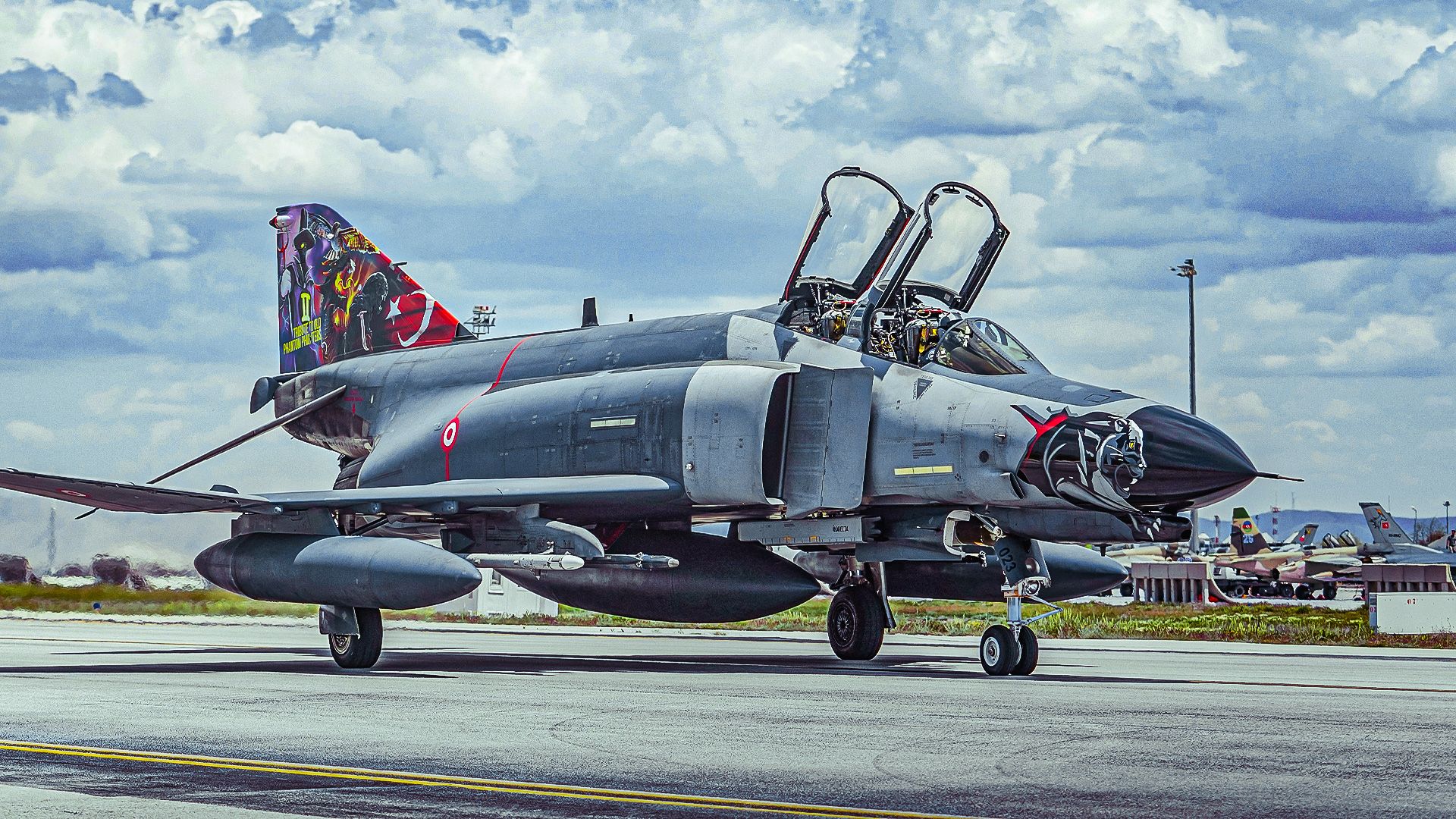
The McDonnell Douglas F-4 Phantom II remains a historic milestone in aviation, recognized as one of the fastest military aircraft ever produced. Designed in the late 1950s, it became operational with the United States Navy in December 1960. Despite its initial challenges in combat, the F-4 would evolve into a dominant force during the Cold War, achieving impressive performance metrics that still impress today.
Performance and Specifications
The F-4 Phantom II was engineered primarily for high-altitude, long-range combat, capable of exceeding Mach 2.23. This speed made it the fastest fighter jet of its era. Pilots praised its acceleration, with a maximum climb rate of approximately 41,000 feet per minute. In a record-setting flight in 1961, the F-4 reached an altitude of over 66,443 feet.
Equipped with two General Electric J79 afterburning turbojets, each producing over 17,000 lbs of thrust, the F-4 demonstrated rapid acceleration and deceleration capabilities. Its design focused on utilizing advanced missile technology, allowing for engagements at distances beyond visual range. The aircraft was initially armed with air-to-air and air-to-surface missiles, negating the need for a close-range gun, which would later prove to be a significant oversight.
Challenges in Combat
The F-4 Phantom II faced significant hurdles during its early deployment in the Vietnam War. Although it was an excellent interceptor, its adaptation for air superiority roles revealed critical flaws. The F-4 struggled in dogfighting scenarios, primarily due to its bulky size and lack of a short-range cannon. Early combat missions highlighted its radar’s difficulty in distinguishing between friendly and enemy aircraft, forcing pilots into close engagements with adversaries like the MiG-21.
The missile systems employed by the F-4 often failed to hit their targets, and without a gun, the aircraft was vulnerable in dogfights. Consequently, the F-4 was shot down at alarming rates during its initial combat operations. This prompted a reevaluation of air combat strategies by the US military.
Improvements and Legacy
Recognizing the F-4’s limitations, military engineers implemented several upgrades. External gun pods were added, although they were generally inaccurate. The introduction of the F-4E variant, featuring an internal Gatling cannon, marked a significant improvement. Additionally, modifications like leading-edge slats enhanced maneuverability, while smokeless engines reduced the aircraft’s signature.
Despite its initial shortcomings, the F-4 Phantom II demonstrated remarkable adaptability, serving in various roles beyond its original design. By the end of its production run in 1981, nearly 5,200 units had been built, making it the most widely produced American supersonic fighter. The F-4 remained in service with the US Air Force until 1997, with its final variants used as target drones until 2016.
The enduring legacy of the F-4 Phantom II is evident in its influence on later aircraft designs, particularly the F-15 Eagle. The lessons learned from the F-4’s operational history directly contributed to the development of the F-15, which prioritized agility and dogfighting capabilities over sheer speed.
In summary, the McDonnell Douglas F-4 Phantom II not only set records for speed and altitude but also transformed air combat strategies. Its ability to adapt and evolve has solidified its status as an icon in military aviation history.










Canada Must Revise Education Strategies to Improve Math Scores

American Airlines: A Century of Evolution and Dominance

Doug Ford Rides Snowmobile to Support Muskoka Hospital Fundraising

Winnipeg’s Shivers & Shimmies Gala Features International Star THIS WEEKEND

Money Williams Leads Montana to Last-Minute 73-68 Win Over Idaho

Seahawks Logo Sparks Cultural Awakening Ahead of Super Bowl

Beloved Educator Dianne Sharp Passes Away at 78

3 Doors Down Lead Singer Brad Arnold Dies at 47 After Cancer Battle

Fungi Flourish on Carrot Waste: A Solution for Global Hunger

Secwepemc First Nation Seeks Aboriginal Title Over Kamloops Area

Scientists Unearth Ancient Antarctic Ice to Unlock Climate Secrets

Urgent Fire Erupts at Salvation Army on Christmas Evening

Canadian Curler E.J. Harnden Announces Retirement from Competition

Manitoba’s Burger Champion Shines Again Amid Dining Innovations

Fatal Crash on Highway 11 Claims Three Lives, Major Closure Ongoing

Trump and McCormick to Announce $70 Billion Energy Investments

Four Astronauts Return to Earth After International Space Station Mission

TransLink Launches Food Truck Program to Boost Revenue in Vancouver
-
 Politics3 months ago
Secwepemc First Nation Seeks Aboriginal Title Over Kamloops Area
-
 World7 months ago
Scientists Unearth Ancient Antarctic Ice to Unlock Climate Secrets
-
 Top Stories1 month ago
Urgent Fire Erupts at Salvation Army on Christmas Evening
-
 Sports1 month ago
Canadian Curler E.J. Harnden Announces Retirement from Competition
-
 Lifestyle5 months ago
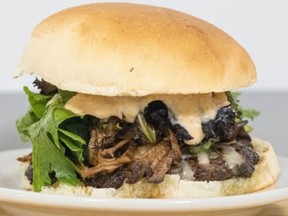
Manitoba’s Burger Champion Shines Again Amid Dining Innovations
-
 Top Stories2 months ago
Fatal Crash on Highway 11 Claims Three Lives, Major Closure Ongoing
-
 Entertainment7 months ago
Trump and McCormick to Announce $70 Billion Energy Investments
-
 Science7 months ago
Four Astronauts Return to Earth After International Space Station Mission
-
 Lifestyle7 months ago
TransLink Launches Food Truck Program to Boost Revenue in Vancouver
-

 Technology5 months ago
Apple Notes Enhances Functionality with Markdown Support in macOS 26
-

 Top Stories1 month ago
Blue Jays Sign Kazuma Okamoto: Impact on Bo Bichette’s Future
-

 Top Stories2 months ago
NHL Teams Inquire About Marc-André Fleury’s Potential Return