
World
Toronto’s Driverless Vehicle Pilot Starts Without Councillor Input

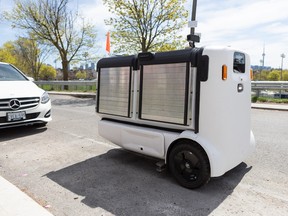
A pilot project involving driverless vehicles in Toronto began without prior notification to city councillors, according to recent reports. Despite previous pushes for more regulations from local politicians, the provincial government launched the initiative while city officials were largely uninformed of the details. The situation emerged following a freedom-of-information request that uncovered emails between City Hall and the Ontario Ministry of Transportation, revealing a lack of communication regarding the project.
Documents included a letter from the Ontario Ministry of Transportation to auto manufacturer Magna International, which conducted a pilot program in downtown Toronto for four months. This letter, outlining various conditions for the project, was not shared with city councillors before the vehicles hit the streets. The councillors expressed their discontent, with Dianne Saxe and Gord Perks voicing concerns about their exclusion from the decision-making process.
On May 8, 2025, an article published by CityNews highlighted these grievances. Following this, Ashley Curtis, the deputy general manager of Toronto’s transportation services division, requested access to the ministry’s letter. On May 27, Felix Fung, an assistant deputy minister, responded by stating that while there were no concerns about sharing the documents, they were to be treated as confidential.
The pilot project began on May 26, 2025 and concluded on September 24, 2025. It was implemented under provincial jurisdiction, which limited the city’s oversight. The ministry’s conditions included a speed limit of 32 km/h and required that a human supervisor follow the vehicles in a “chase vehicle.” However, concerns remained regarding safety and privacy, particularly because the vehicles were equipped with cameras.
The ministry’s letter indicated that all data generated during testing needed to comply with federal and provincial privacy laws, but it lacked specific language regarding the handling of photos or video footage. The absence of stringent privacy measures raised alarms among city officials.
Additionally, the conditions outlined in the ministry’s correspondence were not enough to satisfy all safety concerns. While restrictions on carrying dangerous goods and providing regular safety reports were included, further limitations were deemed unnecessary by the ministry. Notably, it refused to implement a ban on busy sections of Bloor Street or restrict operations during peak traffic hours.
On May 26, Jerome Brideau, a team lead at the ministry, communicated further adjustments to the pilot, including restrictions on left turns and operating the vehicles in snowy conditions. The ministry’s reluctance to impose stricter controls drew criticism, particularly as these details surfaced only on the day the program commenced.
Toronto Police also raised safety concerns, particularly regarding the accountability in the event of a collision involving the autonomous vehicles. Jennifer Niece, the manager of strategic policy and initiatives with transportation services, noted that the first responder action plan submitted by Magna contained vague references to future consultations with the city and local police.
City officials had anticipated public scrutiny surrounding the pilot, especially given the ongoing dialogue about traffic congestion in Toronto. Niece indicated in a March 2025 email that the slow movements of the automated vehicles would likely attract criticism, particularly from residents frustrated with existing traffic issues.
In response to inquiries about the communication timeline regarding the pilot, the Ontario Ministry of Transportation issued a brief statement. It emphasized its collaboration with municipalities, stating that local feedback was considered throughout the approval process, including input from City of Toronto officials.
Magna International characterized the Toronto pilot as a significant opportunity for advancing autonomous delivery technologies. Spokesman Dave Niemiec described it as yielding valuable insights into safe navigation and urban delivery logistics, highlighting the cooperation received from various governmental partners.
As cities around the world explore the integration of autonomous technology, the Toronto pilot serves as a case study in the complexities of governance, safety, and public engagement in the era of smart transportation.









Morris Churches Unite for Annual Good Friday Walk With the Cross

Chloe Zhao’s ‘Buffy’ Reboot Cancelled: Sarah Michelle Gellar Speaks Out

Essential Ingredients for Life Found in Ryugu Asteroid Samples

Urgent Rescue: NSR Airlifts Injured Climber from Nanaimo

Riverside Heart Ball Achieves Record $815,000 for Mental Health

Cognizant Launches AI Factory to Enhance Enterprise AI Scalability

Samsung’s Galaxy Watch 9 to Feature Larger Battery Than Before

Toronto’s AIDS Memorial Faces Potential Redesign Amid Community Concerns

Bayern Munich Loses Luis Díaz Red Card Appeal Despite Referee’s Admission

Secwepemc First Nation Seeks Aboriginal Title Over Kamloops Area

Fatal Crash on Highway 11 Claims Three Lives, Major Closure Ongoing

Manitoba’s Burger Champion Shines Again Amid Dining Innovations

Canadian Curler E.J. Harnden Announces Retirement from Competition

Urgent Fire Erupts at Salvation Army on Christmas Evening

Scientists Unearth Ancient Antarctic Ice to Unlock Climate Secrets

Trump and McCormick to Announce $70 Billion Energy Investments

Minister Faces Scrutiny Over Delayed Foreign Interference Watchdog Appointment

Four Astronauts Return to Earth After International Space Station Mission
-
 Politics5 months ago
Secwepemc First Nation Seeks Aboriginal Title Over Kamloops Area
-
 Top Stories4 months ago
Fatal Crash on Highway 11 Claims Three Lives, Major Closure Ongoing
-
 Lifestyle7 months ago
Manitoba’s Burger Champion Shines Again Amid Dining Innovations
-
 Sports3 months ago
Canadian Curler E.J. Harnden Announces Retirement from Competition
-
 Top Stories3 months ago
Urgent Fire Erupts at Salvation Army on Christmas Evening
-
 World9 months ago
Scientists Unearth Ancient Antarctic Ice to Unlock Climate Secrets
-
 Entertainment9 months ago
Trump and McCormick to Announce $70 Billion Energy Investments
-
 World5 months ago
Minister Faces Scrutiny Over Delayed Foreign Interference Watchdog Appointment
-
 Science9 months ago
Four Astronauts Return to Earth After International Space Station Mission
-

 Lifestyle9 months ago
Monika Hibbs Unveils Acres Market & Interiors in Major Rebrand
-
 Lifestyle9 months ago
TransLink Launches Food Truck Program to Boost Revenue in Vancouver
-

 World1 month ago
Ranchman’s Cookhouse & Dancehall to Relocate by Early 2027