
World
Trump’s Claims on Greenland and China’s Arctic Presence Examined

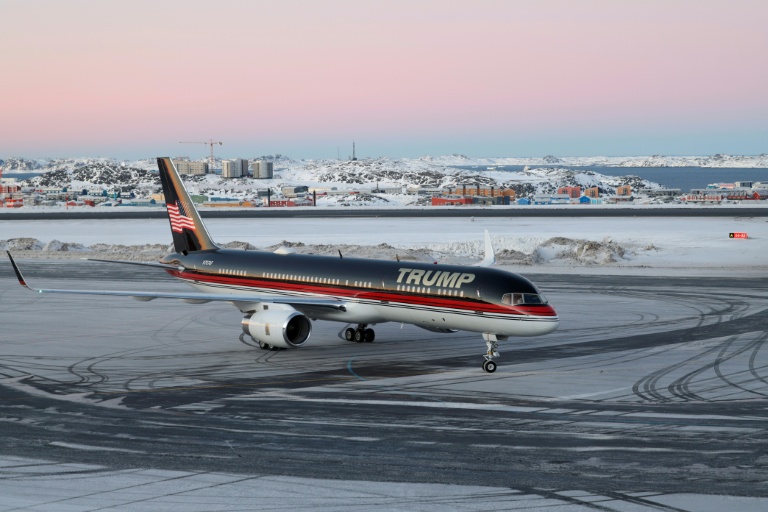
The assertion by US President Donald Trump that Greenland could fall into Chinese control without American intervention has sparked debate about China’s actual presence in the Arctic. While Trump has suggested that the island could soon be swarming with “Chinese destroyers and submarines,” analysts indicate that China’s military footprint in the region is minimal and far from the threat he describes.
Understanding China’s Arctic Activities
Analysts have pointed out that Greenland is not currently overrun with Chinese or Russian vessels. According to Paal Sigurd Hilde from the Norwegian Institute for Defence Studies, “This is nonsense.” He explains that, although China has enhanced its military cooperation with Russia since the latter’s invasion of Ukraine in 2022, its activities in the Arctic remain limited. Hilde emphasizes that China’s route to gaining significant influence in the Arctic largely depends on its partnership with Russia. Joint operations between the two nations have increased, including a notable bomber patrol near Alaska in 2024.
China has invested in a small number of icebreakers equipped with deep-sea mini-submarines, which can aid in mapping the seabed—an activity that could have military implications. While Beijing claims these operations are intended for scientific research, the potential for military application raises concerns among Western powers.
China’s Influence and Economic Interests
The question of whether China is expanding its influence in the Arctic is complex. Helena Legarda of the Mercator Institute for China Studies in Berlin highlights that China’s ambitions are clear: to enhance its geopolitical footprint in a region it views as vital for emerging competition. Beijing initiated the Polar Silk Road project in 2018, the Arctic segment of its broader Belt and Road Initiative, aiming to become a “polar great power” by 2030.
China’s scientific research efforts are expanding, with stations established in Iceland and Norway. Furthermore, Chinese investments in Russian liquefied natural gas and infrastructure projects, such as a railway in Sweden, reflect its strategic interests in the region. Nonetheless, these ambitions have encountered resistance. Recent attempts to purchase a defunct naval station in Greenland and an airport in Finland were thwarted, partially due to reported US pressure on allied nations to reject Chinese investments.
Greenland boasts the world’s eighth-largest reserves of rare earth elements, essential for technologies like electric vehicles and military equipment, according to the US Geological Survey. Despite China’s dominance in the global production of these materials, the nation has faced setbacks in accessing Greenland’s resources. A significant project at the Kvanefjeld deposit was halted by the Greenland government in 2021 due to environmental concerns, and in 2024, a deposit in southern Greenland was sold to a New York-based firm after US lobbying efforts.
As Jesper Willaing Zeuthen, an associate professor at Aalborg University, notes, there were concerns in Denmark and the US that large-scale mining investments could increase Chinese influence in Greenland. However, these investments have not materialized, leading to a reevaluation of China’s engagement strategies, which have become more cautious due to rising diplomatic costs.
Transforming Shipping Routes in the Arctic
The Polar Silk Road aims to connect China to Europe through Arctic shipping routes that are becoming increasingly viable as climate change melts sea ice. In an agreement reached in October, China and Russia committed to developing the Northern Sea Route (NSR) along Russia’s northern coast. In a demonstration of the route’s potential, a Chinese vessel reached Britain in just 20 days last year, significantly reducing the travel time compared to the traditional Suez Canal route.
While this passage could revolutionize global shipping and lessen China’s reliance on the Straits of Malacca, challenges remain. Ships must be modified for icy conditions, navigation can be complicated by fog, and weather is often severe. In 2022, Chinese vessels made only 14 voyages along the NSR, primarily transporting Russian gas.
The NSR does not pass by Greenland, undermining Trump’s claims of a Chinese naval presence near the island. Zeuthen asserts that there are no indications of Chinese military activity in or around Greenland’s Arctic region, stating, “Actual security issues are very hard to identify.”
As international dynamics in the Arctic evolve, the interplay between military presence, economic interests, and geopolitical ambitions continues to shape the narrative surrounding China and Greenland.













NFL Stars Elevate Travel with Lavish Private Jets

Seniors Debate Old Age Security Payments Amid Financial Concerns

Colm Feore Voices Multiple Characters in Oscar-Nominated Short

Don Monahan Launches Urgent PC Leadership Bid in New Brunswick

Chef Jason Sawision Triumphs with Bronze at Canadian Culinary Championship

Scientists Harness Carrot Waste to Grow Fungi for Protein Source

Victoria Counsellors Launch Innovative Podcast to Enhance Mental Health Access

Eglinton Crosstown LRT Launches in Toronto After 5,000 Days

Strategy Transforms into Leveraged Bitcoin Vehicle Amid $12.4B Loss

Secwepemc First Nation Seeks Aboriginal Title Over Kamloops Area

Scientists Unearth Ancient Antarctic Ice to Unlock Climate Secrets

Urgent Fire Erupts at Salvation Army on Christmas Evening

Canadian Curler E.J. Harnden Announces Retirement from Competition

Manitoba’s Burger Champion Shines Again Amid Dining Innovations

Fatal Crash on Highway 11 Claims Three Lives, Major Closure Ongoing

Trump and McCormick to Announce $70 Billion Energy Investments

Four Astronauts Return to Earth After International Space Station Mission

TransLink Launches Food Truck Program to Boost Revenue in Vancouver
-
 Politics3 months ago
Secwepemc First Nation Seeks Aboriginal Title Over Kamloops Area
-
 World7 months ago
Scientists Unearth Ancient Antarctic Ice to Unlock Climate Secrets
-
 Top Stories1 month ago
Urgent Fire Erupts at Salvation Army on Christmas Evening
-
 Sports1 month ago
Canadian Curler E.J. Harnden Announces Retirement from Competition
-
 Lifestyle5 months ago
Manitoba’s Burger Champion Shines Again Amid Dining Innovations
-
 Top Stories2 months ago
Fatal Crash on Highway 11 Claims Three Lives, Major Closure Ongoing
-
 Entertainment7 months ago
Trump and McCormick to Announce $70 Billion Energy Investments
-
 Science7 months ago
Four Astronauts Return to Earth After International Space Station Mission
-
 Lifestyle7 months ago
TransLink Launches Food Truck Program to Boost Revenue in Vancouver
-

 Technology5 months ago
Apple Notes Enhances Functionality with Markdown Support in macOS 26
-

 Top Stories1 month ago
Blue Jays Sign Kazuma Okamoto: Impact on Bo Bichette’s Future
-

 Top Stories2 months ago
NHL Teams Inquire About Marc-André Fleury’s Potential Return