
World
United Airlines Unveils Longest Nonstop Routes for 2026 with 787-10


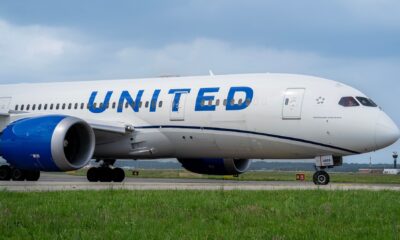
In March 2026, United Airlines will operate its longest nonstop routes using the Boeing 787-10 Dreamliner, a strategic move that highlights the aircraft’s unique capabilities. The 787-10, with its larger capacity, is designed to cater to high-demand markets while balancing operational efficiency and profitability. While it lacks the ultra-long-haul range of its smaller siblings, the 787-8 and 787-9, it excels on routes that are consistently full and premium-heavy.
The 787-10 is particularly suited for transoceanic missions, effectively serving destinations across the Atlantic, parts of South America, and East Asia. United Airlines has strategically selected routes that align with the aircraft’s strengths, including robust business demand and high year-round load factors. The deployment of the 787-10 not only enhances capacity but also supports United’s overall network strategy, allowing for a concentrated presence in key markets.
Analyzing United’s 787 Network Strategy
United Airlines’ network strategy centers around a hub-and-spoke model, with the Dreamliner family forming the backbone of its long-haul growth. The airline leverages the 787-10 for high-density, premium-leaning trunk routes. This approach allows United to optimize its fleet, reducing unit costs and protecting flight frequencies while freeing up longer-range aircraft for ultra-long-haul services.
According to data provided by aviation analytics firm Cirium, the 787-10 is primarily deployed on a select number of high-impact routes, ensuring that it meets the demands of heavy traffic markets without overextending resources. By focusing on these key routes, United maximizes operational efficiency and profitability.
The 787-10 can typically accommodate around 330 passengers in a two-class configuration, making it an ideal choice for long-haul flights where both passenger comfort and load factor are crucial. With advanced aerodynamics and a composite airframe, the aircraft offers lower fuel burn and quieter operations, enhancing the passenger experience.
Key Routes and Market Deployment
The deployment of the 787-10 is concentrated at Chicago O’Hare International Airport (ORD), which serves as the primary hub for United’s long-haul operations. From this hub, the airline connects to various European destinations, including Frankfurt (FRA), Paris (CDG), and Rome (FCO). Additionally, the aircraft operates flagship services to Tokyo Haneda (HND) and São Paulo (GRU).
Significantly, the longest nonstop routes include Chicago to Haneda, covering a distance of 6,306 miles (10,149 km), and Newark to Tel Aviv, which spans 5,692 miles (9,160 km). These routes demonstrate the 787-10’s capability to handle high-demand sectors effectively.
Other notable routes include the Los Angeles to Haneda leg, measuring 5,488 miles (8,832 km), and Chicago to Athens, at 5,463 miles (8,792 km). Many flights fall within the 4,100-4,900 mile (6,600-7,900 km) range, where the 787-10 thrives in delivering both capacity and efficiency.
United Airlines’ focus on the 787-10 reflects a broader fleet strategy aimed at modernizing its aircraft and enhancing international expansion. The airline has committed to acquiring 100 new Dreamliners, with deliveries scheduled between 2024 and 2032, in a bid to phase out older models such as the 767 and 777.
The deployment of the 787-10 not only aligns with United’s growth objectives but also adds significant value to its service offerings. By concentrating operations in high-demand markets, the airline bolsters its competitive edge and maximizes profitability in a demanding industry landscape.
The 787-10 stands out as a unique asset, balancing increased capacity with operational efficiency. As United Airlines continues to refine its fleet strategy, the 787-10 will play a critical role in shaping its long-haul service offerings, ensuring that the airline remains well-positioned to meet the evolving needs of its passengers.










Morris Churches Unite for Annual Good Friday Walk With the Cross

Chloe Zhao’s ‘Buffy’ Reboot Cancelled: Sarah Michelle Gellar Speaks Out

Essential Ingredients for Life Found in Ryugu Asteroid Samples

Urgent Rescue: NSR Airlifts Injured Climber from Nanaimo

Riverside Heart Ball Achieves Record $815,000 for Mental Health

Cognizant Launches AI Factory to Enhance Enterprise AI Scalability

Samsung’s Galaxy Watch 9 to Feature Larger Battery Than Before

Toronto’s AIDS Memorial Faces Potential Redesign Amid Community Concerns

Bayern Munich Loses Luis Díaz Red Card Appeal Despite Referee’s Admission

Secwepemc First Nation Seeks Aboriginal Title Over Kamloops Area

Fatal Crash on Highway 11 Claims Three Lives, Major Closure Ongoing

Manitoba’s Burger Champion Shines Again Amid Dining Innovations

Canadian Curler E.J. Harnden Announces Retirement from Competition

Urgent Fire Erupts at Salvation Army on Christmas Evening

Scientists Unearth Ancient Antarctic Ice to Unlock Climate Secrets

Trump and McCormick to Announce $70 Billion Energy Investments

Minister Faces Scrutiny Over Delayed Foreign Interference Watchdog Appointment

Four Astronauts Return to Earth After International Space Station Mission
-
 Politics5 months ago
Secwepemc First Nation Seeks Aboriginal Title Over Kamloops Area
-
 Top Stories4 months ago
Fatal Crash on Highway 11 Claims Three Lives, Major Closure Ongoing
-
 Lifestyle7 months ago
Manitoba’s Burger Champion Shines Again Amid Dining Innovations
-
 Sports3 months ago
Canadian Curler E.J. Harnden Announces Retirement from Competition
-
 Top Stories3 months ago
Urgent Fire Erupts at Salvation Army on Christmas Evening
-
 World9 months ago
Scientists Unearth Ancient Antarctic Ice to Unlock Climate Secrets
-
 Entertainment9 months ago
Trump and McCormick to Announce $70 Billion Energy Investments
-
 World5 months ago
Minister Faces Scrutiny Over Delayed Foreign Interference Watchdog Appointment
-
 Science9 months ago
Four Astronauts Return to Earth After International Space Station Mission
-

 Lifestyle9 months ago
Monika Hibbs Unveils Acres Market & Interiors in Major Rebrand
-

 Lifestyle9 months ago
TransLink Launches Food Truck Program to Boost Revenue in Vancouver
-

 World1 month ago
Ranchman’s Cookhouse & Dancehall to Relocate by Early 2027