
World
US Air Force Maintains Dominance Despite Declining Numbers

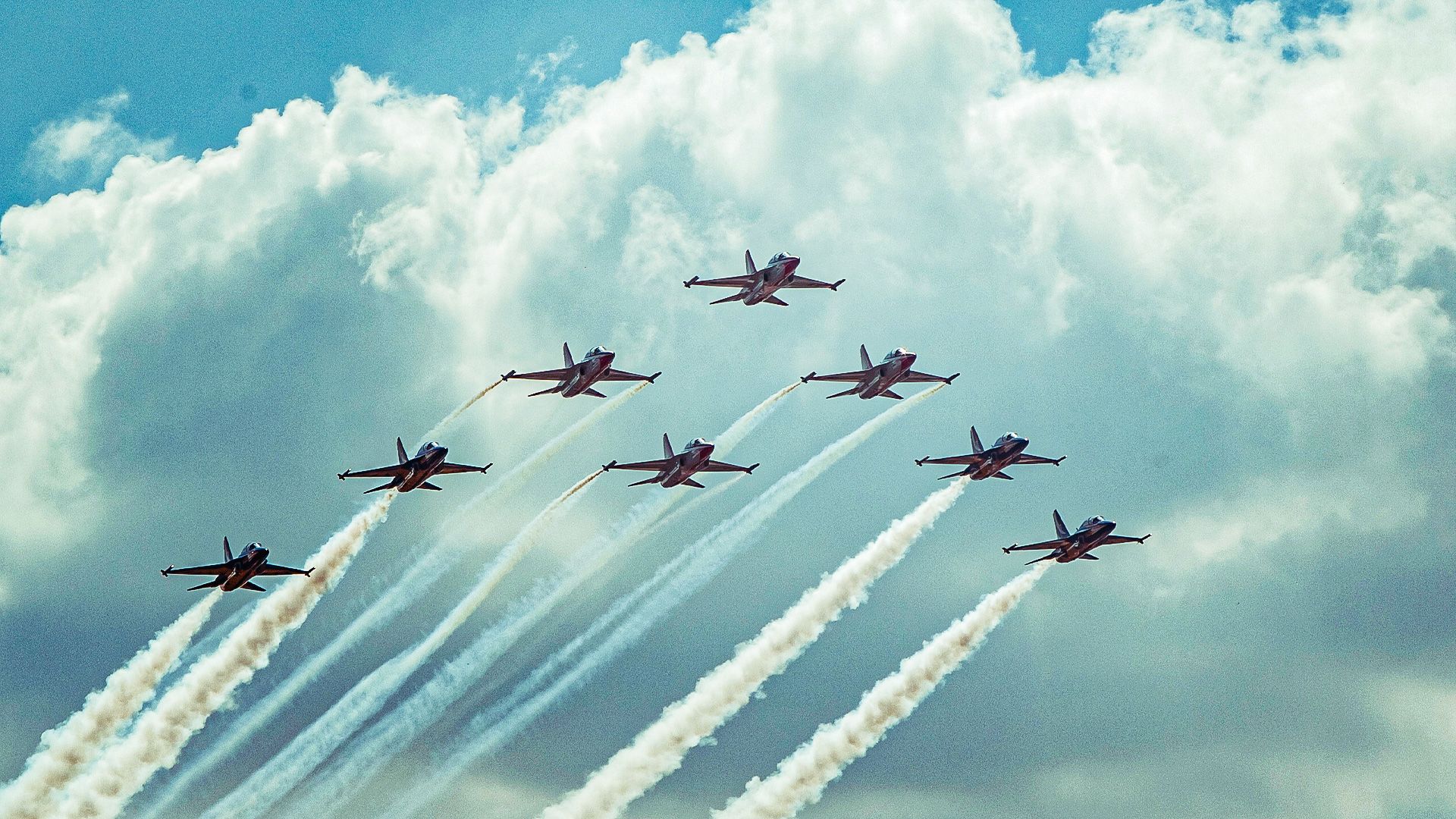
The United States Air Force (USAF) continues to hold the title of the world’s largest air force, yet a closer examination reveals a troubling trend: the number of crewed aircraft has been diminishing for decades. As the USAF grapples with this decline, it plans to introduce new technologies such as Collaborative Combat Aircraft and various uncrewed aerial vehicles (UAVs) starting in the late 2020s to help bolster its fleet.
The size of the US military’s aviation capabilities becomes more significant when including aircraft from the US Navy, Marine Corps, and Army. As of March 2023, the US military boasts a total of approximately 10,300 crewed aircraft, a figure that expands to around 13,300 when trainers and UAVs are included. This far surpasses the combined capabilities of any other nation, with the next largest military aviation forces being those of Russia and China.
The State of the US Air Force
The USAF currently operates around 3,600 aircraft, excluding trainers and uncrewed systems. When these additional aircraft are factored in, the total rises to approximately 5,000. This represents a potential drop below the 5,000 mark for the first time since World War II. Not only does the USAF lead in quantity, but it also excels in capability. The US operates significantly more special mission aircraft and approximately 75% of the world’s tanker aircraft, which are vital for extending the reach of fighter jets.
In stark contrast to its historical peak, when the US Army Air Forces had around 72,000 aircraft at the end of World War II, the current inventory reflects a dramatic decrease in numbers. The USAF’s capacity to project power globally remains unmatched, thanks in large part to these specialized aircraft.
Other Branches of US Military Aviation
The US Navy and Marine Corps operate their own aviation branches, which effectively serve as distinct air forces. The US Army, primarily known for its helicopter operations, may possess more crewed aircraft than the USAF when excluding trainers and UAVs. Estimates suggest that US Army Aviation has between 3,500 and 4,000 crewed aircraft, which rises to around 4,600 when including UAVs and trainers.
The combined strength of the Navy and Marine Corps is substantial, with approximately 2,900 crewed aircraft, increasing to around 3,700 when UAVs and trainers are included. The US military aviation landscape, therefore, reveals a complex picture, with various branches contributing to a formidable total.
According to the US Department of Defense and Breaking Defense, a breakdown of air force sizes reveals:
– US Air Force: 3,600 (excluding trainers/UAVs) / 5,000 (including trainers/UAVs)
– US Navy/Marine Corps: 2,900 (excluding trainers/UAVs) / 3,700 (including trainers/UAVs)
– US Army: 3,800 (excluding trainers/UAVs) / 4,600 (including trainers/UAVs)
With these figures, US military aviation is approximately three times larger than the next largest combined military force in the world.
Challenges Facing Russia and China
While Russia ranks second in total aircraft numbers, it faces significant challenges. The ongoing conflict in Ukraine has resulted in combat losses and an aging fleet, making the reliability of its numbers questionable. Current estimates suggest that Russia operates around 3,500 crewed aircraft, with a total of 4,200 when trainers and UAVs are included. However, many of these aircraft are outdated, leading to uncertainty regarding their operational status.
In contrast, China’s People’s Liberation Army Air Force (PLAAF) is estimated to have over 3,150 aircraft, not including trainers and UAVs. The US Department of Defense reports that of these, approximately 2,400 are combat aircraft. The PLAAF is rapidly modernizing, with a focus on fourth and fifth-generation fighters, which positions it as a close competitor to Western air forces.
Fighter jet production rates in 2025 illustrate a significant trend, with the US and China accounting for around 85% of global deliveries. The US delivered 234 fighter jets, including a record 191 F-35s, while China’s estimates suggest deliveries between 220 and 290 jets.
Future of Military Aviation
The trend toward fewer but more capable aircraft marks a significant shift in military aviation strategy. The USAF’s transition from around 5,500 aircraft in 2017 to a projected figure below 5,000 indicates a departure from mass numbers to advanced technology. The F-35, for instance, offers capabilities that far exceed those of the aircraft it replaces, allowing for a smaller fleet to maintain effectiveness.
To address the decline in crewed aircraft numbers, the USAF plans to integrate more UAVs, specifically the Collaborative Combat Aircraft. While the USAF is expected to procure around 185 advanced F-47s, it aims to acquire over 1,000 CCAs, highlighting a significant shift in air combat dynamics.
As military aviation continues to evolve, the blurring lines between crewed jets and unmanned systems will shape future engagements. The US Air Force remains the largest globally, but the decline in crewed aircraft underscores a transformative period in military aviation.













Morris Churches Unite for Annual Good Friday Walk With the Cross

Chloe Zhao’s ‘Buffy’ Reboot Cancelled: Sarah Michelle Gellar Speaks Out

Essential Ingredients for Life Found in Ryugu Asteroid Samples

Urgent Rescue: NSR Airlifts Injured Climber from Nanaimo

Riverside Heart Ball Achieves Record $815,000 for Mental Health

Cognizant Launches AI Factory to Enhance Enterprise AI Scalability

Samsung’s Galaxy Watch 9 to Feature Larger Battery Than Before

Toronto’s AIDS Memorial Faces Potential Redesign Amid Community Concerns

Bayern Munich Loses Luis Díaz Red Card Appeal Despite Referee’s Admission

Secwepemc First Nation Seeks Aboriginal Title Over Kamloops Area

Fatal Crash on Highway 11 Claims Three Lives, Major Closure Ongoing

Manitoba’s Burger Champion Shines Again Amid Dining Innovations

Canadian Curler E.J. Harnden Announces Retirement from Competition

Urgent Fire Erupts at Salvation Army on Christmas Evening

Scientists Unearth Ancient Antarctic Ice to Unlock Climate Secrets

Minister Faces Scrutiny Over Delayed Foreign Interference Watchdog Appointment

Trump and McCormick to Announce $70 Billion Energy Investments

Four Astronauts Return to Earth After International Space Station Mission
-
 Politics5 months ago
Secwepemc First Nation Seeks Aboriginal Title Over Kamloops Area
-
 Top Stories4 months ago
Fatal Crash on Highway 11 Claims Three Lives, Major Closure Ongoing
-
 Lifestyle7 months ago
Manitoba’s Burger Champion Shines Again Amid Dining Innovations
-
 Sports3 months ago
Canadian Curler E.J. Harnden Announces Retirement from Competition
-
 Top Stories3 months ago
Urgent Fire Erupts at Salvation Army on Christmas Evening
-
 World9 months ago
Scientists Unearth Ancient Antarctic Ice to Unlock Climate Secrets
-
 World5 months ago
Minister Faces Scrutiny Over Delayed Foreign Interference Watchdog Appointment
-
 Entertainment9 months ago
Trump and McCormick to Announce $70 Billion Energy Investments
-
 Science9 months ago
Four Astronauts Return to Earth After International Space Station Mission
-

 Lifestyle9 months ago
Monika Hibbs Unveils Acres Market & Interiors in Major Rebrand
-

 Lifestyle9 months ago
TransLink Launches Food Truck Program to Boost Revenue in Vancouver
-

 World1 month ago
Ranchman’s Cookhouse & Dancehall to Relocate by Early 2027