
World
US and Japan Condemn China’s Actions Amid Rising Tensions

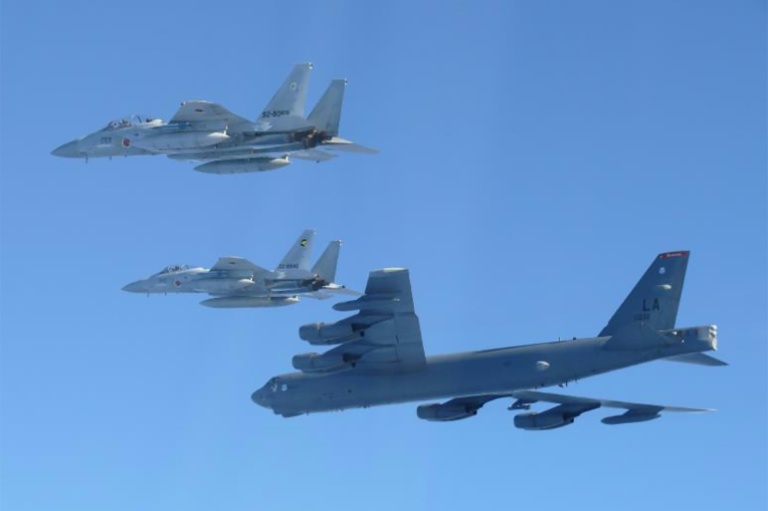
The defense chiefs of the United States and Japan have expressed strong concerns regarding China’s recent military actions, which they believe threaten regional peace. During a call on December 6, US Secretary of Defense Pete Hegseth and Japanese Defense Minister Shinjiro Koizumi discussed a radar incident involving Chinese aircraft that locked onto Japanese jets near Taiwan. This incident was highlighted as a significant escalation in the already tense security dynamics of the Indo-Pacific region.
Details of the Radar Incident
According to Japan’s defense ministry, the radar incident occurred shortly after comments from Japanese Prime Minister Sanae Takaichi regarding Taiwan, which reportedly angered Beijing. Following this, Chinese and Russian aircraft conducted joint patrols in the vicinity of Japan, further heightening concerns. In their conversation, Hegseth and Koizumi described the security situation as increasingly severe and emphasized that China’s actions are “not conducive to regional peace and stability.”
Koizumi took to social media platform X to clarify Japan’s position, stating that China was “disseminating information that is completely contrary to the facts” concerning the radar incident. He reiterated that Japan does not seek an escalation of tensions, emphasizing a calm response while remaining open to dialogue.
Military Exercises and Regional Implications
In a broader context, the discussions between the defense leaders included China’s military activities and Japan’s plans to increase its defense spending. Hegseth’s office noted the importance of the US-Japan alliance in deterring aggression in the Asia-Pacific, highlighting the commitment to regional security.
On November 7, Takaichi suggested that Japan would consider military intervention in the event of a Chinese attack on Taiwan, a territory that China claims as its own. This declaration has added another layer of complexity to the already fraught relations between the involved nations.
Last week, Chinese J-15 jets from the Liaoning aircraft carrier reportedly locked radar on Japanese aircraft operating in international waters near Okinawa. Japan’s response involved scrambling fighter jets, which is a routine measure but underscores the heightened alertness in the region.
In turn, China’s foreign ministry accused Japan of sending aircraft to intrude into Chinese training areas, claiming that Japan’s actions were intended to “create tense situations” and “maliciously hype up the situation.”
Adding to the tension, two Russian Tu-95 nuclear-capable bombers conducted joint flights with Chinese H-6 bombers over the East China Sea. Japan reported scrambling its own jets in response to these operations, which further demonstrates the escalating military activities in the area. The day following these exercises, Japan and the US conducted their own air drills, which included two US B-52 bombers and multiple Japanese F-35 and F-15 aircraft.
South Korea also reported incursions by Russian and Chinese warplanes into its air defense zone, prompting it to deploy its fighter jets in response. China confirmed its military drills with Russia as part of “annual cooperation plans,” while Moscow described these exercises as routine.
The ongoing developments in the region serve as a stark reminder of the intricate geopolitical landscape and the potential for conflict. As military activities continue to intensify, the need for open communication and diplomatic dialogue remains critical for maintaining stability in the Indo-Pacific.










Newman Girls Basketball Triumphs Over Erie-Prophetstown 38-22

Miami International Holdings Prices $276.75 Million Stock Offering

Newman Girls Basketball Triumphs Over Erie-Prophetstown 38-22

Advocates Demand Action as 1,350 Students Excluded from Sask. Schools

Verdict Expected Monday in Jimmy Lai’s National Security Trial

Brandon Police Chief Advocates for 72-Hour Sobering Centre

New Bridge Name Ignites Controversy, Reveals Vital History

Canucks Suffer 3-2 Loss to Sabres; Demko Shows Signs of Rust

Zach Benson Scores Winner as Sabres Edge Canucks 3-2 in Tight Battle

Secwepemc First Nation Seeks Aboriginal Title Over Kamloops Area

Scientists Unearth Ancient Antarctic Ice to Unlock Climate Secrets

Trump and McCormick to Announce $70 Billion Energy Investments

TransLink Launches Food Truck Program to Boost Revenue in Vancouver

Four Astronauts Return to Earth After International Space Station Mission

Manitoba’s Burger Champion Shines Again Amid Dining Innovations

Apple Notes Enhances Functionality with Markdown Support in macOS 26

Urgent Update: Fatal Crash on Highway 99 Claims Life of Pitt Meadows Man

Homemade Houseboat ‘Neverlanding’ Captivates Lake Huron Voyagers
-
 Politics1 month ago
Secwepemc First Nation Seeks Aboriginal Title Over Kamloops Area
-
 World5 months ago
Scientists Unearth Ancient Antarctic Ice to Unlock Climate Secrets
-
 Entertainment5 months ago
Trump and McCormick to Announce $70 Billion Energy Investments
-
 Lifestyle5 months ago
TransLink Launches Food Truck Program to Boost Revenue in Vancouver
-
 Science5 months ago
Four Astronauts Return to Earth After International Space Station Mission
-
 Lifestyle3 months ago
Manitoba’s Burger Champion Shines Again Amid Dining Innovations
-
 Technology4 months ago
Apple Notes Enhances Functionality with Markdown Support in macOS 26
-
 Top Stories2 months ago
Urgent Update: Fatal Crash on Highway 99 Claims Life of Pitt Meadows Man
-
 Top Stories2 weeks ago
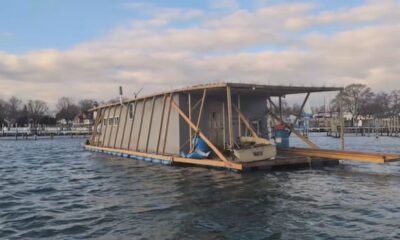
Homemade Houseboat ‘Neverlanding’ Captivates Lake Huron Voyagers
-

 Politics4 months ago
Ukrainian Tennis Star Elina Svitolina Faces Death Threats Online
-

 Sports5 months ago
Search Underway for Missing Hunter Amid Hokkaido Bear Emergency
-

 Politics5 months ago
Carney Engages First Nations Leaders at Development Law Summit