
World
US Energy Secretary Criticizes Europe’s Climate Policies at IEA

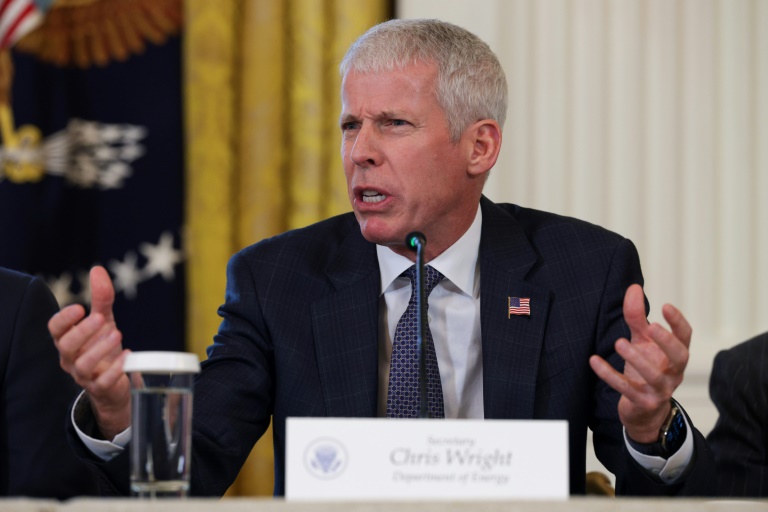
US Energy Secretary Chris Wright stated that Europe’s current climate policies, which he referred to as a “climate cult,” are negatively impacting the region’s economy. Speaking to AFP on Tuesday during ministerial meetings at the International Energy Agency (IEA) in Paris, Wright emphasized that the United States has adopted a stance of “tough love” towards its allies to encourage them to strengthen their economies.
Wright’s remarks come as US-European relations have faced challenges, particularly following President Donald Trump’s controversial proposal to acquire Greenland. Despite these tensions, Wright reassured European nations that the US remains a dependable partner. He defended Trump’s recent decision to repeal the legal framework for US climate regulations, claiming that concerns about rising carbon emissions are overstated. “The real impact is the world’s a little bit warmer, a little bit greener, a little bit wetter,” he explained.
The statement contrasts sharply with reports from the EU’s climate monitor, which indicates that the past three years have been the hottest on record, driven by increasing greenhouse gas emissions.
Energy Prices and Economic Opportunities
When asked for a message to European leaders, Wright stressed the importance of taking energy policy seriously, stating, “Energy makes people’s lives better.” He criticized the “climate cult” for leading to heightened energy prices in Europe while simultaneously reducing domestic energy production. “It has reduced economic opportunities for Europeans,” he noted, underscoring the need for a “strong, powerful, industrial, wealthy, prosperous Europe.”
In response to concerns about Europe’s reliance on US liquefied natural gas (LNG), EU energy commissioner Dan Jorgensen commented last month on the potential risks associated with this dependency, particularly in light of the recent geopolitical tensions surrounding Greenland. Jorgensen indicated that the situation serves as a wake-up call for Europe to reassess its energy strategies.
Wright assured that the US would not leverage its LNG supply for political purposes, reinforcing the country’s position as a reliable energy supplier to Europe.
IEA Meetings and Future Energy Policies
As Wright participates in the IEA meetings on Wednesday and Thursday, he has expressed discontent with the organization’s focus on renewable energy. He warned that if the IEA does not reform its approach, the United States might reconsider its involvement. Founded in 1974 to coordinate responses to energy supply disruptions, the IEA has increasingly focused on climate initiatives, which Wright labeled a “crazy policy.”
He stated, “Climate advocacy groups can do what they want, but you can’t have climate advocacy within an honest group that’s about energy security.” Scientists have emphasized that achieving net zero emissions by 2050 is crucial for meeting the goals of the Paris Agreement, which aims to limit global warming to 1.5 degrees Celsius above pre-industrial levels.
Wright’s remarks were made shortly after he became the highest-ranking US official to visit Venezuela since the US special forces captured and ousted socialist leader Nicolas Maduro on January 3, 2023. He described Trump’s strategy regarding Venezuela as “a revolutionary geopolitical idea” aimed at increasing oil production and improving the living conditions of Venezuelans, while also addressing security concerns for the US.
As the IEA discussions unfold, the interplay between energy policy, economic stability, and geopolitical dynamics remains a focal point for both the United States and Europe.













Morris Churches Unite for Annual Good Friday Walk With the Cross

Chloe Zhao’s ‘Buffy’ Reboot Cancelled: Sarah Michelle Gellar Speaks Out

Essential Ingredients for Life Found in Ryugu Asteroid Samples

Urgent Rescue: NSR Airlifts Injured Climber from Nanaimo

Riverside Heart Ball Achieves Record $815,000 for Mental Health

Cognizant Launches AI Factory to Enhance Enterprise AI Scalability

Samsung’s Galaxy Watch 9 to Feature Larger Battery Than Before

Toronto’s AIDS Memorial Faces Potential Redesign Amid Community Concerns

Bayern Munich Loses Luis Díaz Red Card Appeal Despite Referee’s Admission

Secwepemc First Nation Seeks Aboriginal Title Over Kamloops Area

Fatal Crash on Highway 11 Claims Three Lives, Major Closure Ongoing

Manitoba’s Burger Champion Shines Again Amid Dining Innovations

Canadian Curler E.J. Harnden Announces Retirement from Competition

Urgent Fire Erupts at Salvation Army on Christmas Evening

Scientists Unearth Ancient Antarctic Ice to Unlock Climate Secrets

Minister Faces Scrutiny Over Delayed Foreign Interference Watchdog Appointment

Trump and McCormick to Announce $70 Billion Energy Investments

Monika Hibbs Unveils Acres Market & Interiors in Major Rebrand
-
 Politics5 months ago
Secwepemc First Nation Seeks Aboriginal Title Over Kamloops Area
-
 Top Stories4 months ago
Fatal Crash on Highway 11 Claims Three Lives, Major Closure Ongoing
-
 Lifestyle7 months ago
Manitoba’s Burger Champion Shines Again Amid Dining Innovations
-
 Sports4 months ago
Canadian Curler E.J. Harnden Announces Retirement from Competition
-
 Top Stories4 months ago
Urgent Fire Erupts at Salvation Army on Christmas Evening
-
 World9 months ago
Scientists Unearth Ancient Antarctic Ice to Unlock Climate Secrets
-
 World5 months ago
Minister Faces Scrutiny Over Delayed Foreign Interference Watchdog Appointment
-
 Entertainment9 months ago
Trump and McCormick to Announce $70 Billion Energy Investments
-
 Lifestyle9 months ago
Monika Hibbs Unveils Acres Market & Interiors in Major Rebrand
-

 Science9 months ago
Four Astronauts Return to Earth After International Space Station Mission
-

 Lifestyle9 months ago
TransLink Launches Food Truck Program to Boost Revenue in Vancouver
-

 World2 months ago
Ranchman’s Cookhouse & Dancehall to Relocate by Early 2027