
World
Wildfires in Central Chile Claim 18 Lives Amid Heatwave

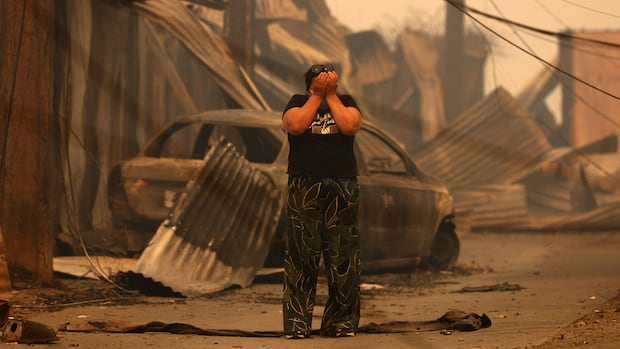
Wildfires sweeping through central and southern Chile have resulted in the deaths of at least 18 people, destroyed hundreds of homes, and consumed thousands of acres of forest. The fires broke out on Sunday, March 3, 2024, as the country endures a significant heatwave, with temperatures soaring above 38°C. In response to the escalating disaster, Chilean President Gabriel Boric declared a state of catastrophe in the affected Biobio and Ñuble regions, approximately 500 kilometers south of the capital, Santiago.
The state of catastrophe enables the government to suspend constitutional rights and facilitates increased military support to combat over two dozen active wildfires that have devastated around 8,500 hectares (approximately 21,000 acres) of land, according to the national forestry agency. President Boric, during a press conference in the city of Concepcion, expressed condolences to the victims and indicated that the initial death toll and damage estimates might rise as more information becomes available. He stated, “The total number of affected homes in the Biobio region alone is certainly more than 1,000, just so far.”
Local authorities have voiced their frustration over the lack of immediate government assistance as wildfires forced the evacuation of approximately 50,000 people. Rodrigo Vera, the mayor of Penco, a small coastal town in the Biobio region, criticized the government’s delayed response. In an interview with a local radio station, he stated, “Dear President Boric, from the bottom of my heart, I have been here for four hours, a community is burning and there is no [government] presence.”
Firefighters faced significant challenges in battling the flames, hindered by extreme heat and strong winds. Interior Minister Alvaro Elizalde warned that weather conditions would remain unfavorable, stating, “Weather conditions for the coming hours are not good and indicate extreme temperatures.”
Residents were taken by surprise as the fires spread rapidly, with many believing they were safe. “Many people didn’t evacuate. They stayed in their houses because they thought the fire would stop at the edge of the forest,” shared John Guzman, a 55-year-old resident from Penco. Others, like Juan Lagos, 52, recounted fleeing with their families in darkness, saying, “We fled running, with the kids, in the dark.”
The fires have wreaked havoc in Penco, destroying homes, vehicles, a school, and a church. Local resident Victor Burboa, 54, expressed the heartbreak of losing friends, stating, “From what we can see, there are people who died … and we knew them well. Everyone here knew them.”
Wildfires are a recurring issue in central and southern Chile, typically peaking in February as temperatures rise and the country grapples with a prolonged drought. In 2024, wildfires along Chile’s central coastline resulted in at least 130 fatalities, marking the deadliest natural disaster since the devastating earthquake in 2010.
The situation in neighboring Argentina is equally dire, as wildfires continue to consume thousands of acres in the southern Patagonia region, exacerbated by the ongoing hot and dry weather conditions. As both countries confront these environmental challenges, the focus remains on providing support and resources to affected communities.













Morris Churches Unite for Annual Good Friday Walk With the Cross

Chloe Zhao’s ‘Buffy’ Reboot Cancelled: Sarah Michelle Gellar Speaks Out

Essential Ingredients for Life Found in Ryugu Asteroid Samples

Urgent Rescue: NSR Airlifts Injured Climber from Nanaimo

Riverside Heart Ball Achieves Record $815,000 for Mental Health

Cognizant Launches AI Factory to Enhance Enterprise AI Scalability

Samsung’s Galaxy Watch 9 to Feature Larger Battery Than Before

Toronto’s AIDS Memorial Faces Potential Redesign Amid Community Concerns

Bayern Munich Loses Luis Díaz Red Card Appeal Despite Referee’s Admission

Secwepemc First Nation Seeks Aboriginal Title Over Kamloops Area

Fatal Crash on Highway 11 Claims Three Lives, Major Closure Ongoing

Manitoba’s Burger Champion Shines Again Amid Dining Innovations

Canadian Curler E.J. Harnden Announces Retirement from Competition

Urgent Fire Erupts at Salvation Army on Christmas Evening

Scientists Unearth Ancient Antarctic Ice to Unlock Climate Secrets

Minister Faces Scrutiny Over Delayed Foreign Interference Watchdog Appointment

Trump and McCormick to Announce $70 Billion Energy Investments

Monika Hibbs Unveils Acres Market & Interiors in Major Rebrand
-
 Politics5 months ago
Secwepemc First Nation Seeks Aboriginal Title Over Kamloops Area
-
 Top Stories4 months ago
Fatal Crash on Highway 11 Claims Three Lives, Major Closure Ongoing
-
 Lifestyle7 months ago
Manitoba’s Burger Champion Shines Again Amid Dining Innovations
-
 Sports4 months ago
Canadian Curler E.J. Harnden Announces Retirement from Competition
-
 Top Stories4 months ago
Urgent Fire Erupts at Salvation Army on Christmas Evening
-
 World9 months ago
Scientists Unearth Ancient Antarctic Ice to Unlock Climate Secrets
-
 World5 months ago
Minister Faces Scrutiny Over Delayed Foreign Interference Watchdog Appointment
-
 Entertainment9 months ago
Trump and McCormick to Announce $70 Billion Energy Investments
-
 Lifestyle9 months ago
Monika Hibbs Unveils Acres Market & Interiors in Major Rebrand
-

 Science9 months ago
Four Astronauts Return to Earth After International Space Station Mission
-

 Lifestyle9 months ago
TransLink Launches Food Truck Program to Boost Revenue in Vancouver
-

 World2 months ago
Ranchman’s Cookhouse & Dancehall to Relocate by Early 2027