
World
YMCA Launches Transitional Housing Initiative for Hospital Discharged


A new initiative in Montreal is addressing the critical needs of individuals experiencing homelessness after hospital discharge. The YMCA has partnered with the CIUSSS de l’Ouest-de-l’Île-de-Montréal to launch a three-month transitional housing pilot program named A Pathway to Recovery. This program aims to provide safe, private accommodations for patients discharged from the Jewish General Hospital or Montreal General Hospital, allowing them a supportive environment as they recover.
Darin Luckie, a participant in the program, shared his journey, which was marred by substance use and the challenges posed by the COVID-19 pandemic. After facing prolonged homelessness, Luckie found himself in a situation where winter temperatures dipped to -30 degrees Celsius. He expressed the despair of living on the streets, saying, “It’s –30 outside and I don’t want to do this no more.”
The pilot program, launched in mid-January 2024, is located at the YMCA Tupper site in Westmount, Quebec. It provides 48 private rooms, including units designed for couples. This initiative is particularly important as individuals experiencing homelessness often struggle to recover from medical conditions when discharged from hospitals. According to Catherine Roberge, Chief of Program Administration for Addiction and Homelessness at CIUSSS, “There’s a big flux of people without an address coming in for care and coming back often to the ER.”
Supporting Recovery and Reducing Hospital Strain
The program aims to alleviate the pressure on emergency departments by offering a stable environment for recovery. Roberge pointed out that many patients return to emergency rooms after being discharged due to inadequate support. “A simple wound, while experiencing homelessness at the same time, can be very difficult to recover from,” she added.
By providing transitional housing, patients gain access to clinical services, case management, and housing support. They can follow up on their care at local community health centres while enjoying the autonomy of their own private space. Currently, the program prioritizes referrals from the Jewish General Hospital, where the number of homeless patients surged from 149 in the 2022-2023 period to 339 in 2024-2025, according to CIUSSS data.
The YMCA manages the facility and psychosocial support, while CIUSSS supplies on-site nurses, social workers, and addiction liaison workers. This collaborative effort aims to address a diverse range of issues, including substance addiction, mental illness, and mobility impairments. Roberge emphasized, “It’s very diverse,” noting that the program provides three meals a day, along with case workers to assist in finding permanent housing.
Longer Stays and Comprehensive Support
Unlike traditional shelters, the transitional housing model allows residents to stay for up to 45 days, which is significantly longer than most winter shelters. This extended duration not only provides stability but also facilitates a more thorough recovery process. The pilot project was made possible by a temporary decrease in demand for asylum seeker housing at the YMCA, which retains the flexibility to reactivate beds as needed.
The success of A Pathway to Recovery will be evaluated based on various criteria, including the rate of emergency department returns within 45 days and overall user satisfaction.
As for Darin Luckie, he shared his hopes for the future. Having experienced the harsh realities of homelessness since August 2022, he expressed a desire to break the cycle. “I want to have a key to my own apartment so I can get a phone and a job,” he stated, highlighting the interconnected challenges many face in transitioning from homelessness to stability.
Luckie’s experience at the YMCA has already made a difference in his life. “I shower, I shave, I take care of myself,” he said, reflecting on the positive impact of having a secure space to call his own. “I can go to my room and know my tablet is safe. That’s a big thing.”
Through initiatives like A Pathway to Recovery, the YMCA and CIUSSS are taking significant steps to ensure that individuals like Luckie receive the support they need during a vulnerable time, ultimately fostering a pathway toward stability and independence.










Olympic Women’s Hockey Game Postponed Due to Norovirus Outbreak

Vancouver Transforms into ‘The Last of Us’ Set for Season 3

Anthropic Study Reveals Risks in AI Coding, Calls for Oversight

Montreal Launches Urgent Project to Combat Youth Homelessness

GSK Shares Rise for Seven Consecutive Sessions, Up 22% This Year

Invest in CT Real Estate Trust for Monthly Income at 5.8%

AT&T Unveils Affordable Smartphone and Smartwatch for Kids

Former Officer Gets Conditional Sentence for Data Abuse of 33 Women

Boldy, Horvat, and Vejmelka Shine as NHL Stars of the Week

Secwepemc First Nation Seeks Aboriginal Title Over Kamloops Area

Scientists Unearth Ancient Antarctic Ice to Unlock Climate Secrets

Urgent Fire Erupts at Salvation Army on Christmas Evening

Canadian Curler E.J. Harnden Announces Retirement from Competition

Manitoba’s Burger Champion Shines Again Amid Dining Innovations

Fatal Crash on Highway 11 Claims Three Lives, Major Closure Ongoing

Trump and McCormick to Announce $70 Billion Energy Investments

Four Astronauts Return to Earth After International Space Station Mission

TransLink Launches Food Truck Program to Boost Revenue in Vancouver
-
 Politics3 months ago
Secwepemc First Nation Seeks Aboriginal Title Over Kamloops Area
-
 World7 months ago
Scientists Unearth Ancient Antarctic Ice to Unlock Climate Secrets
-
 Top Stories1 month ago
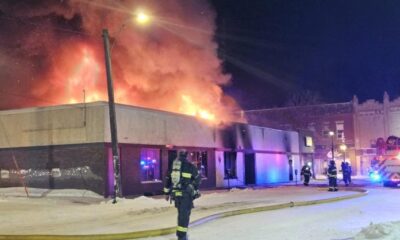
Urgent Fire Erupts at Salvation Army on Christmas Evening
-
 Sports1 month ago
Canadian Curler E.J. Harnden Announces Retirement from Competition
-
 Lifestyle5 months ago
Manitoba’s Burger Champion Shines Again Amid Dining Innovations
-
 Top Stories2 months ago
Fatal Crash on Highway 11 Claims Three Lives, Major Closure Ongoing
-
 Entertainment7 months ago
Trump and McCormick to Announce $70 Billion Energy Investments
-
 Science7 months ago
Four Astronauts Return to Earth After International Space Station Mission
-
 Lifestyle7 months ago
TransLink Launches Food Truck Program to Boost Revenue in Vancouver
-

 Technology5 months ago
Apple Notes Enhances Functionality with Markdown Support in macOS 26
-

 Top Stories1 month ago
Blue Jays Sign Kazuma Okamoto: Impact on Bo Bichette’s Future
-

 Top Stories2 months ago
NHL Teams Inquire About Marc-André Fleury’s Potential Return