
World
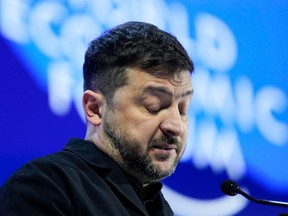
Zelenskyy Proposes Referendum Amid Pressure to Surrender Land

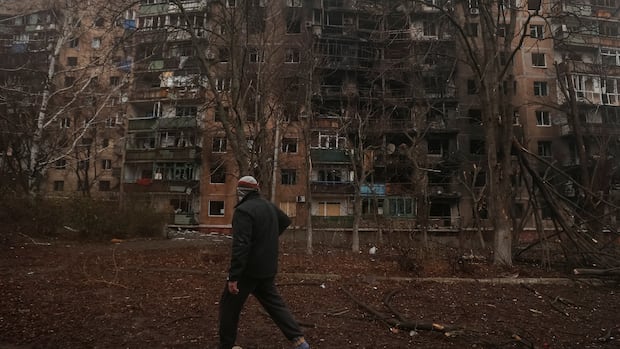
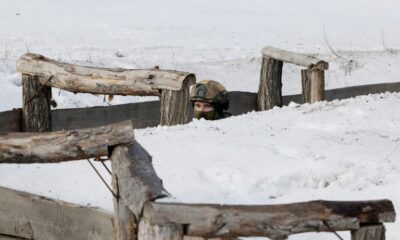
Ukrainian President Volodymyr Zelenskyy has suggested a referendum as a potential solution to the ongoing conflict with Russia, following mounting pressure to relinquish territory in eastern Ukraine. Kramatorsk, a strategic city in the Donetsk region, has remained a critical military and logistical hub for Ukraine throughout the war, but its future hangs in the balance as negotiations intensify.
For nearly four years, Kramatorsk has served as a symbol of Ukrainian resistance. As Russian forces advance closer, the situation for the city’s residents has become increasingly precarious. Under a recent proposal from the Trump administration, Ukraine would be compelled to withdraw troops from Kramatorsk and surrounding areas, transforming them into a special economic zone. Local entrepreneur Maksym Lysenko, who operates a store selling patriotic merchandise in the city, expressed his disbelief at the suggestion, stating, “It’s just absurd. People were dying, shedding their blood, and then what, just give up the territory?”
In a recent interview, Zelenskyy indicated that any significant concessions would ultimately depend on the opinions of Ukrainians themselves. He proposed a referendum as a way to gauge public sentiment, a move that Lysenko interpreted as an attempt to appease President Trump, who has criticized Zelenskyy in the past. “[Zelenskyy] simply said it not to annoy the U.S. president again,” Lysenko remarked.
Increasing Tensions and Public Sentiment
As Russian military positions draw within 20 kilometers of Kramatorsk, the threat of drone and missile attacks looms large. Many residents are now making the difficult choice to evacuate, even as negotiations over the city’s future continue. In response to Trump’s calls for a resolution, Zelenskyy stated that Ukraine is open to holding elections, provided security is guaranteed by the U.S. and other allies.
Surveys conducted by the Kyiv International Institute for Sociology reveal a complex landscape of public opinion. While many Ukrainians support a ceasefire to halt the ongoing conflict, a significant majority—approximately three-quarters—oppose any deal that would require major territorial concessions, including the withdrawal of troops from the Donbas region. Anton Hrushetskyi, the institute’s executive director, noted, “People are tired; people want peace. People are open to concessions, but not to surrender.”
Despite the challenges in determining public sentiment regarding potential peace agreements, Hrushetskyi acknowledged that Ukrainians are prepared to endure the conflict for favorable conditions. Trust in the U.S. has notably declined, with only 21% of Ukrainians expressing confidence in Washington, down from 41% a year prior.
Challenges of Implementing a Referendum
Hrushetskyi cautioned that the logistical challenges of conducting a referendum could be significant, especially given the requirement for a ceasefire—a condition that Russia has repeatedly dismissed. Following Zelenskyy’s proposal, Yuri Ushakov, a foreign policy adviser to President Putin, rejected the idea of a referendum, asserting that the region is considered Russian territory.
Some experts, such as political science professor Mikhail Alexseev from San Diego State University, believe that an online or phone-based referendum could be a viable option for areas that are difficult to access. However, he agrees that the majority of Ukrainians would likely reject any plan that involves ceding territory. “If a referendum took place today, they would not accept at all the kind of proposals that Putin put forward,” he stated.
Recent diplomatic discussions have focused on a leaked 28-point roadmap, which has been criticized by Ukrainian officials and European allies as a demand for territorial concessions from Kyiv in exchange for security guarantees. Ukraine has shown a willingness to reconsider its NATO aspirations, but the question of territorial integrity remains a major sticking point in negotiations.
As the conflict continues to take a toll on its civilian population, many residents in Kramatorsk are fleeing the city. The suspension of railway services due to security concerns has made escape increasingly difficult. Lysenko, who opened his store in Kramatorsk during the summer, is contemplating relocating some of his staff to Kyiv as safety concerns mount.
After nearly four years of war, the desire for peace is palpable among the populace. Yet, for many like Lysenko, conceding territory is seen as a step away from stability. He remarked, “Russia wants all of Ukraine. Even if Donetsk was surrendered completely, in two or three years, we will have a new war.”
The complexities surrounding a potential referendum and public sentiment highlight the challenges Ukraine faces as it navigates a path toward peace while balancing domestic and international pressures. As negotiations proceed, the future of Kramatorsk and the broader region remains uncertain.








Chef Jason Sawision Triumphs with Bronze at Canadian Culinary Championship

Scientists Harness Carrot Waste to Grow Fungi for Protein Source

Victoria Counsellors Launch Innovative Podcast to Enhance Mental Health Access

Eglinton Crosstown LRT Launches in Toronto After 5,000 Days

Strategy Transforms into Leveraged Bitcoin Vehicle Amid $12.4B Loss

Ride App Faces Off Against Google Maps in Transport Challenge

Liam Draxl Secures Dramatic Davis Cup Victory for Canada

Canada Must Revise Education Strategies to Improve Math Scores

American Airlines: A Century of Evolution and Dominance

Secwepemc First Nation Seeks Aboriginal Title Over Kamloops Area

Scientists Unearth Ancient Antarctic Ice to Unlock Climate Secrets

Urgent Fire Erupts at Salvation Army on Christmas Evening

Canadian Curler E.J. Harnden Announces Retirement from Competition

Manitoba’s Burger Champion Shines Again Amid Dining Innovations

Fatal Crash on Highway 11 Claims Three Lives, Major Closure Ongoing

Trump and McCormick to Announce $70 Billion Energy Investments

Four Astronauts Return to Earth After International Space Station Mission

TransLink Launches Food Truck Program to Boost Revenue in Vancouver
-
 Politics3 months ago
Secwepemc First Nation Seeks Aboriginal Title Over Kamloops Area
-
 World7 months ago
Scientists Unearth Ancient Antarctic Ice to Unlock Climate Secrets
-
 Top Stories1 month ago
Urgent Fire Erupts at Salvation Army on Christmas Evening
-
 Sports1 month ago
Canadian Curler E.J. Harnden Announces Retirement from Competition
-
 Lifestyle5 months ago
Manitoba’s Burger Champion Shines Again Amid Dining Innovations
-
 Top Stories2 months ago
Fatal Crash on Highway 11 Claims Three Lives, Major Closure Ongoing
-
 Entertainment7 months ago
Trump and McCormick to Announce $70 Billion Energy Investments
-
 Science7 months ago
Four Astronauts Return to Earth After International Space Station Mission
-
 Lifestyle7 months ago
TransLink Launches Food Truck Program to Boost Revenue in Vancouver
-

 Technology5 months ago
Apple Notes Enhances Functionality with Markdown Support in macOS 26
-

 Top Stories1 month ago
Blue Jays Sign Kazuma Okamoto: Impact on Bo Bichette’s Future
-

 Top Stories2 months ago
NHL Teams Inquire About Marc-André Fleury’s Potential Return