
World
Zelenskyy Seeks Support from European Allies Amid U.S. Pressure

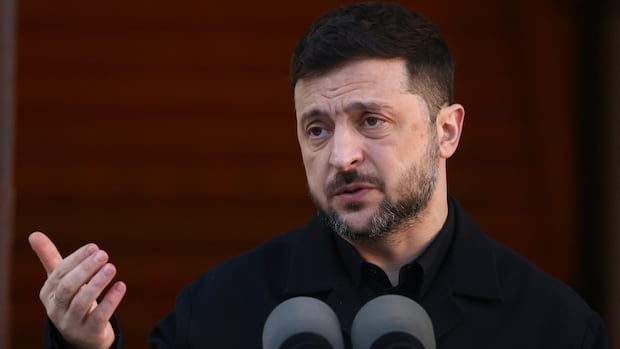
Ukrainian President Volodymyr Zelenskyy is scheduled to meet with leaders from the United Kingdom, France, and Germany in London on Monday as he seeks to rally support against increasing pressure from the United States for a peace deal with Russia. The meeting will include French President Emmanuel Macron and German Chancellor Friedrich Merz, both of whom have expressed their backing for Ukraine amid concerns that U.S. demands may favor Russian interests.
In a video address to the Ukrainian public recorded during his train journey, Zelenskyy stated, “We are starting a new diplomatic week right now — there will be consultations with European leaders.” He emphasized the urgency of addressing security issues, strengthening Ukraine’s defense, and pursuing a unified approach in ongoing negotiations.
The backdrop to these discussions includes intensified Russian military action in Ukraine, which has severely impacted the energy sector and left many cities in darkness. Early Sunday, Russia launched a significant strike on central Ukraine, highlighting the precarious situation on the ground. The recent U.S.-led talks aimed at establishing a ceasefire have concluded without a clear breakthrough, with territorial claims remaining a contentious point.
As the war enters its fourth year, U.S. President Donald Trump’s administration has proposed a revised peace plan that aligns with several of Russia’s demands. Despite this, Zelenskyy maintains that the prospect of peace “depends entirely on Russia.” He will proceed to Brussels later on Monday for further discussions with NATO Secretary General Mark Rutte and European Union leaders, including Antonio Costa and Ursula von der Leyen.
The discussions in London come after days of negotiations between U.S. officials and Ukrainian representatives, which were characterized by Zelenskyy as “constructive but not easy.” Following a week of talks in Miami, there remains little indication that either side is prepared to sign the framework deal proposed by the U.S. negotiating team.
Trump’s recent comments reflect a shift in his approach towards Ukraine. He expressed disappointment in Zelenskyy, claiming that the Ukrainian leader had not reviewed the latest peace proposal. However, it is unclear what evidence supports this assertion. Zelenskyy has consistently argued that achieving peace hinges on collective pressure on Russia and strong negotiating positions from the U.S. and its European allies.
The landscape of U.S. foreign policy towards Ukraine has changed under Trump, who has criticized Zelenskyy for a perceived lack of gratitude for American support. During his first term, Trump faced impeachment for allegedly attempting to solicit Zelenskyy’s assistance in undermining domestic political rival Joe Biden. Now, Trump’s administration is encouraging allies to procure military supplies from U.S. manufacturers while halting the extensive military and humanitarian aid previously provided by the Biden administration.
As European nations strive to strengthen their defense capabilities in response to increasing Russian aggression, Trump’s national security strategy has elicited mixed reactions. It has been noted that the strategy aligns with some of Russia’s perspectives, marking a significant shift in the narrative surrounding U.S.-Russia relations since the annexation of Crimea in 2014.
In this complicated and evolving geopolitical landscape, Zelenskyy’s meetings with European leaders will be critical in shaping Ukraine’s response to both Russian military actions and U.S. diplomatic pressures. The outcomes of these discussions could significantly influence the future of Ukraine and its standing among its allies.











LASC Joins Canadian-Lebanese Ceremony to Honor Fallen Heroes

Nominees for 2026 Golden Globe Awards Announced LIVE Today

Eastern Ontario Snowmobilers Celebrate $3.9M for Trails Reopening

Insights from 32 Thoughts Podcast: Olympic Ice and Hughes Pricing

Fort St. John Students Build Go-Karts, Learn Trade Skills

Zelenskyy Seeks Support from European Allies Amid U.S. Pressure

Voters Cast Ballots in Georgetown-Pownal Byelection for New MLA

Sudbury Diaper Drive Aims to Collect 1,000 Cases This Holiday Season

Cineplex Launches Exciting Surprise Movie Screenings for $8.99

Secwepemc First Nation Seeks Aboriginal Title Over Kamloops Area

Scientists Unearth Ancient Antarctic Ice to Unlock Climate Secrets

Trump and McCormick to Announce $70 Billion Energy Investments

Four Astronauts Return to Earth After International Space Station Mission

TransLink Launches Food Truck Program to Boost Revenue in Vancouver

Apple Notes Enhances Functionality with Markdown Support in macOS 26

Manitoba’s Burger Champion Shines Again Amid Dining Innovations

Urgent Update: Fatal Crash on Highway 99 Claims Life of Pitt Meadows Man

Homemade Houseboat ‘Neverlanding’ Captivates Lake Huron Voyagers
-
 Politics1 month ago
Secwepemc First Nation Seeks Aboriginal Title Over Kamloops Area
-
 World5 months ago
Scientists Unearth Ancient Antarctic Ice to Unlock Climate Secrets
-
 Entertainment5 months ago
Trump and McCormick to Announce $70 Billion Energy Investments
-
 Science5 months ago
Four Astronauts Return to Earth After International Space Station Mission
-
 Lifestyle5 months ago
TransLink Launches Food Truck Program to Boost Revenue in Vancouver
-
 Technology3 months ago
Apple Notes Enhances Functionality with Markdown Support in macOS 26
-
 Lifestyle3 months ago
Manitoba’s Burger Champion Shines Again Amid Dining Innovations
-
 Top Stories2 months ago
Urgent Update: Fatal Crash on Highway 99 Claims Life of Pitt Meadows Man
-
 Top Stories1 week ago
Homemade Houseboat ‘Neverlanding’ Captivates Lake Huron Voyagers
-

 Politics4 months ago
Ukrainian Tennis Star Elina Svitolina Faces Death Threats Online
-

 Sports5 months ago
Search Underway for Missing Hunter Amid Hokkaido Bear Emergency
-
 Politics5 months ago
Carney Engages First Nations Leaders at Development Law Summit